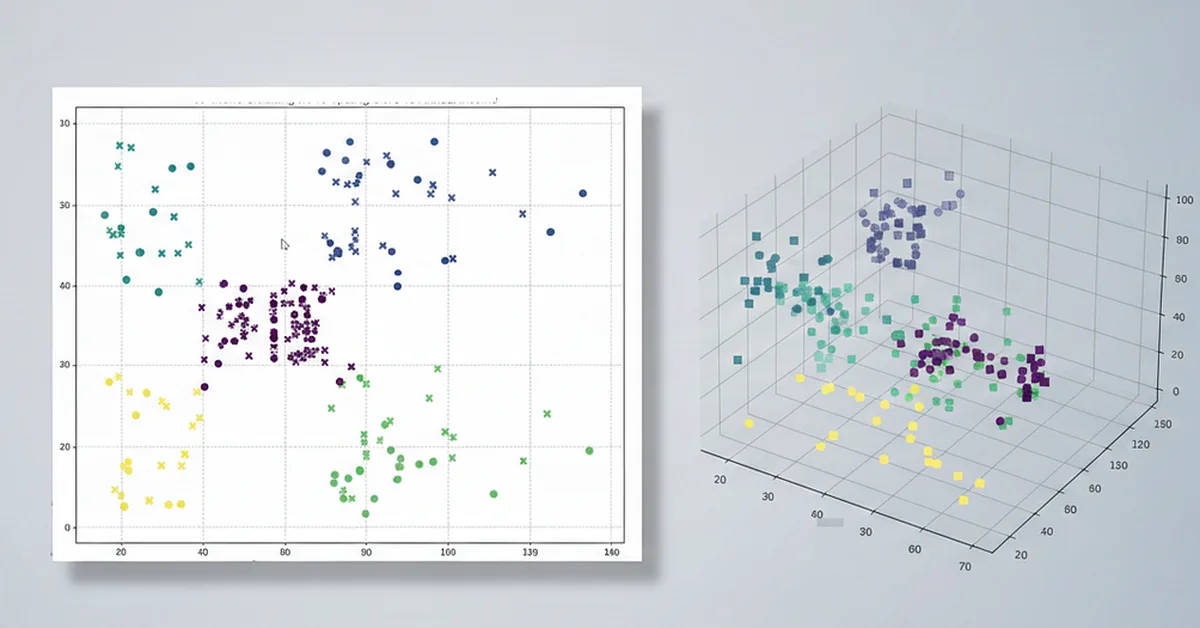
The analysis of customer segmentation using K-Means clustering on a retail dataset revealed distinct groups based on age, annual income, and spending score. In the 2D configuration focusing on "Annual Income" and "Spending Score", five clusters were identified: two low-income groups ("Young High Spenders" and "Mature Low Spenders"), two high-income groups ("Luxury Enthusiasts" and "High Income Savers"), and a balanced cluster representing the majority. Strategies for each group included social media marketing, utility-based promotions, exclusive VIP events, quiet luxury marketing, and mass-market campaigns to increase loyalty.
In the 3D configuration incorporating age, annual income, and spending score with six clusters, detailed insights were provided on customer behavior across these dimensions. The analysis highlighted specific demographic trends and spending patterns, enabling tailored marketing strategies for each segment based on their unique characteristics and needs.
Read the full article at Towards AI - Medium
Want to create content about this topic? Use Nemati AI tools to generate articles, social posts, and more.