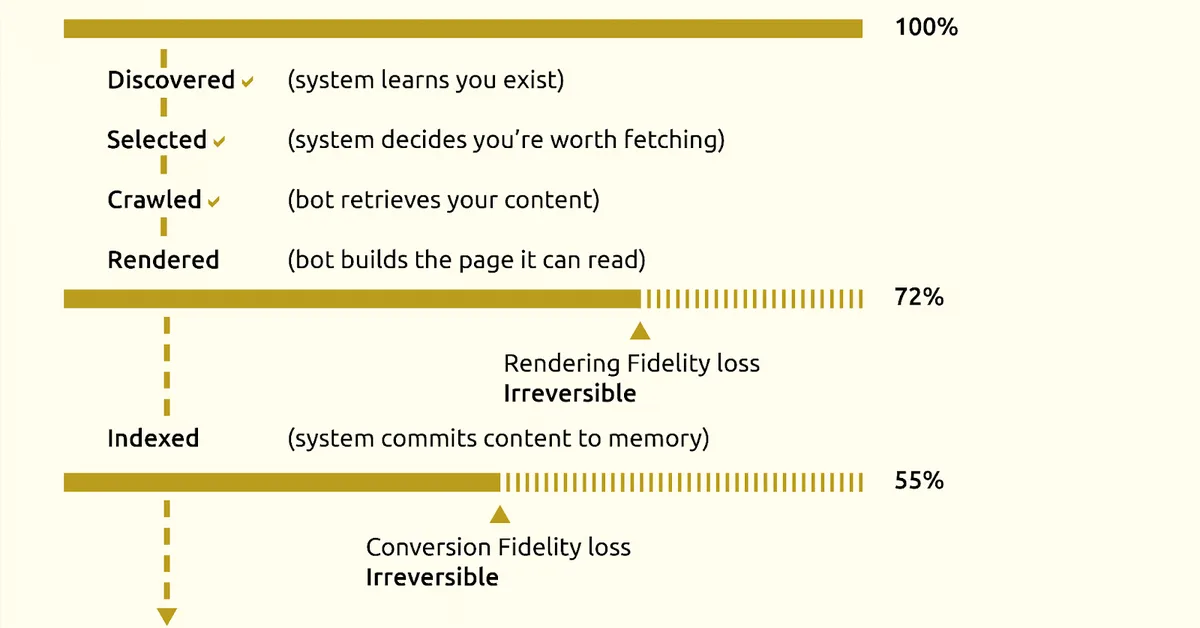
Rendering, crawling, indexing, and annotating processes are critical in how search engines handle web pages. The process involves five key stages (DSCRI gates): Selection, Crawling, Rendering, Indexing, and Annotation. Each stage consumes computational resources based on expected return, influenced by factors like publisher entity authority, topical authority, technical complexity, and system ROI calculations. Structured data plays a crucial role in reducing ambiguity and building confidence but must be consistent with the page content to be effective. The indexing process involves stripping repeating elements, chunking core content into segments, converting these chunks into an internal format, and storing them hierarchically. Issues at any stage can lead to poor annotation or misclassification of content despite successful indexing.
Read the full article at Search Engine Land
Want to create content about this topic? Use Nemati AI tools to generate articles, social posts, and more.