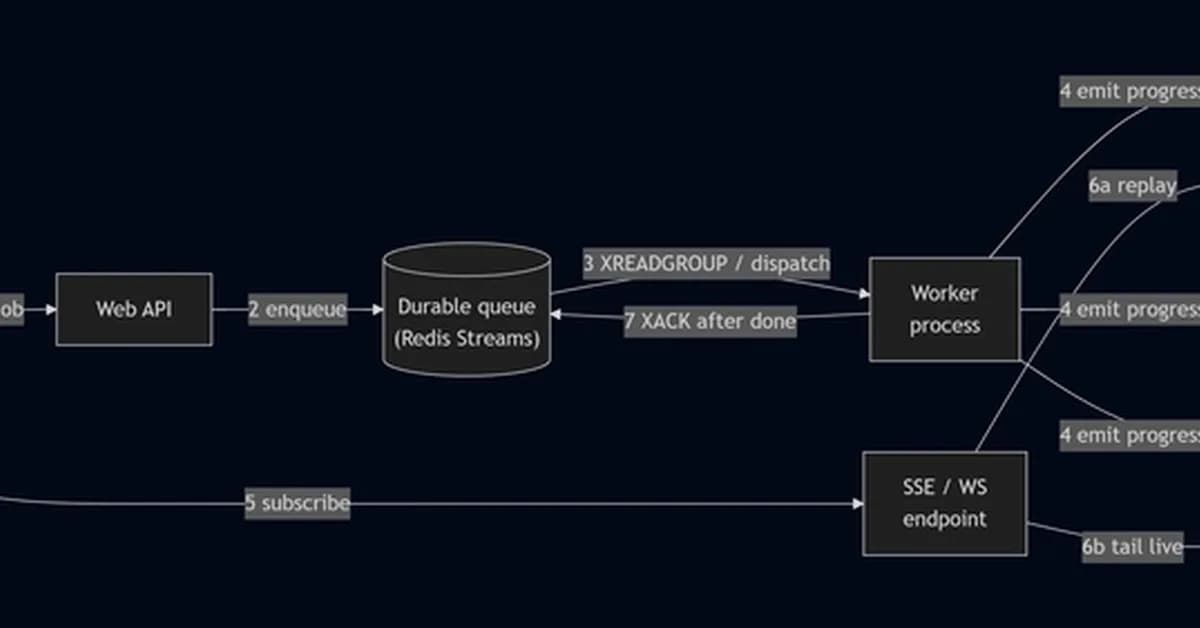
The implementation you've described for handling real-time updates and ensuring continuity of long-running tasks in an SSE (Server-Sent Events) setup is quite thorough. Let's break down the key components and address any potential issues:
Key Components
-
Event Emission:
- The
stream_jobendpoint handles both replaying historical events and tailing live updates. - It subscribes to a Redis Pub/Sub channel first, then reads from an LRANGE of the event history list.
- The
-
Replay Phase:
- Reads all past events from the Redis list in order.
- Yields these events back to the client as they are read.
- Ensures that any terminal events (e.g., job completion) terminate the stream properly.
-
Tail Phase:
- Continues receiving new events via Pub/Sub after replaying historical data.
- Uses a deduplication mechanism to avoid sending duplicate events if an event appears in both the history list and the live channel buffer.
Potential Issues
-
Order of Operations:
- As mentioned, subscribing first before reading from LRANGE is crucial to ensure no events are missed due to race conditions.
-
**D
Read the full article at DEV Community
Want to create content about this topic? Use Nemati AI tools to generate articles, social posts, and more.
4
Contents

Ali NematiWritten by Ali
![[AINews] The Unreasonable Effectiveness of Closing the Loop](/_next/image?url=https%3A%2F%2Fmedia.nemati.ai%2Fmedia%2Fblog%2Fimages%2Farticles%2F600e22851bc7453b.webp&w=3840&q=75)