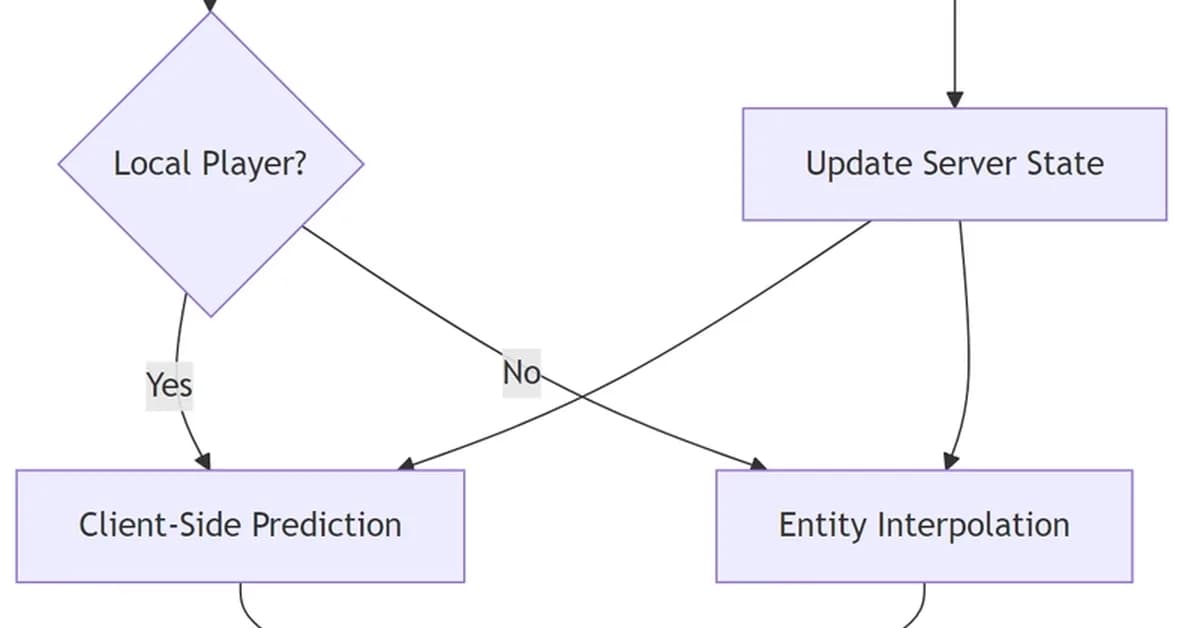
The approach you've described for implementing a multiplayer snake game with real-time physics and rendering is quite comprehensive. Here's a summary of the key points:
1. Real-Time Physics Simulation
-
Server-Side Implementation:
- The server simulates the game state, including snake movement and collision detection.
- It uses a fixed time step for consistent physics simulation across different clients.
-
Client-Side Implementation:
- Clients receive updates from the server at regular intervals (e.g., every 100ms).
- Each client interpolates between received positions to smooth out movements, enhancing perceived responsiveness and realism.
2. Interpolation for Smooth Movement
-
Interpolation Algorithm:
- Uses linear interpolation (
lerp) to calculate the position of each snake segment at any given time between two consecutive updates from the server.
- Uses linear interpolation (
-
Implementation Details:
- Clients maintain a list of past positions and interpolate based on these.
- This helps in reducing latency perception, making the game feel more responsive even with network delays.
3. Trail-Based Rendering
- Trail Simulation:
- Instead of simulating each body segment individually (which can be computationally expensive),
Read the full article at DEV Community
Want to create content about this topic? Use Nemati AI tools to generate articles, social posts, and more.
4
Tags
Contents

Ali NematiWritten by Ali
![[AINews] The Unreasonable Effectiveness of Closing the Loop](/_next/image?url=https%3A%2F%2Fmedia.nemati.ai%2Fmedia%2Fblog%2Fimages%2Farticles%2F600e22851bc7453b.webp&w=3840&q=75)