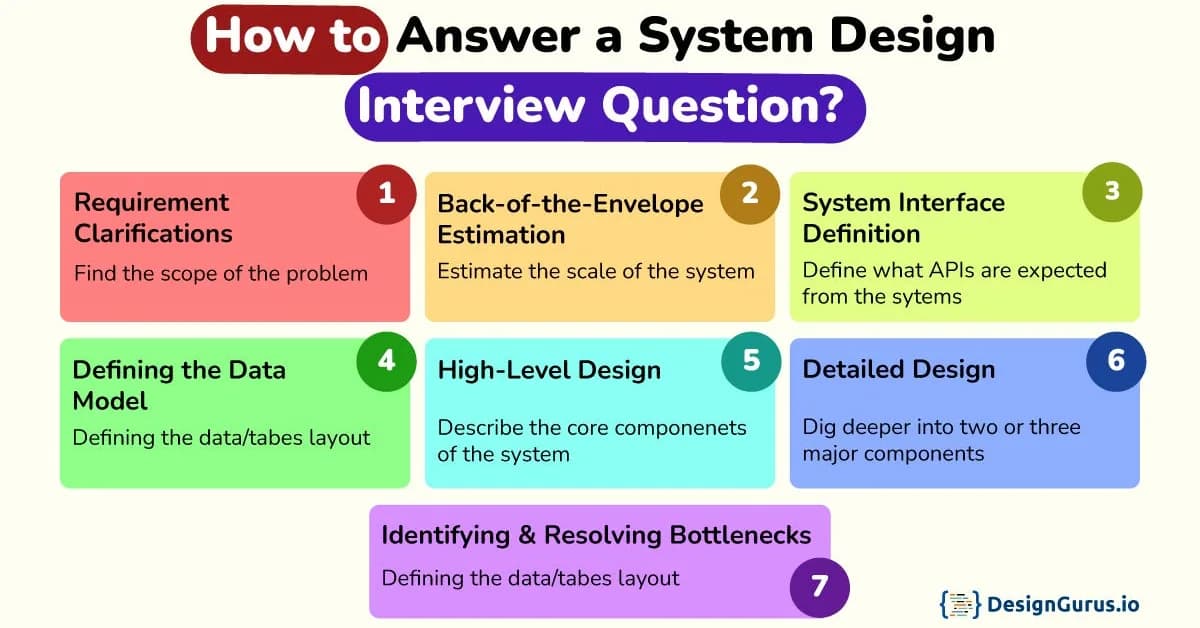
The article provides a structured approach to tackling system design interview questions by categorizing them into three tiers based on complexity and relevance. Here's a summary:
Tier 1: Basic Concepts (Examples)
- Design Dropbox: Focuses on client-server interaction, chunking, deduplication, delta sync, conflict resolution.
- Design Yelp or Nearby Friends: Introduces geospatial indexing concepts like Geohashes, quadtrees, and S2 cells.
Tier 2: Modern Systems (Examples)
- Design Google Docs: Involves operational transforms or CRDTs for real-time collaboration.
- Design a Collaborative Whiteboard Like Miro: Extends the complexity of Google Docs with a 2D plane data model and tighter latency requirements.
Tier 3: Advanced Concepts (Examples)
- Design ChatGPT: Covers GPU scheduling, KV cache reuse, streaming token responses, conversational state management.
- Design a Notification System: Focuses on managing user preferences across multiple channels like push notifications, email, SMS, in-app notifications.
Each tier builds upon the previous one, introducing more complex and modern challenges. Tier 1 questions are foundational, while Tier 3 delves into cutting-edge
Read the full article at DEV Community
Want to create content about this topic? Use Nemati AI tools to generate articles, social posts, and more.
32
Contents

Ali NematiWritten by Ali
![[AINews] The Unreasonable Effectiveness of Closing the Loop](/_next/image?url=https%3A%2F%2Fmedia.nemati.ai%2Fmedia%2Fblog%2Fimages%2Farticles%2F600e22851bc7453b.webp&w=3840&q=75)