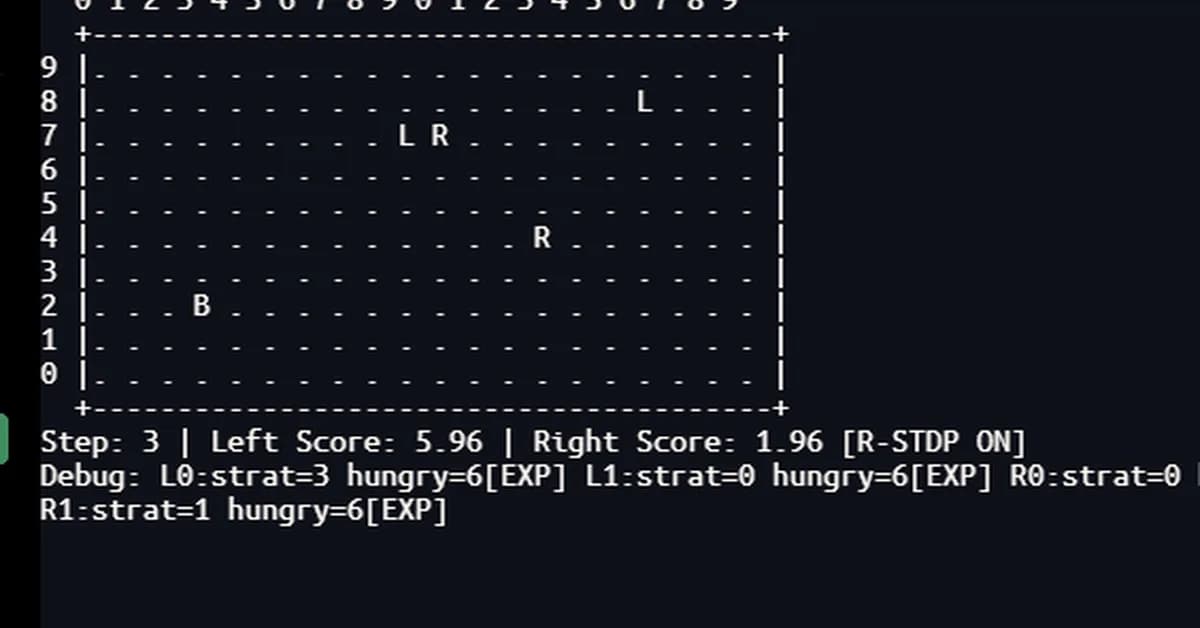
The provided analysis highlights the significant impact of synaptic plasticity (R-STDP) on role reorganization and the emergence of altruistic behaviors in a simulated environment. Here are key points summarized:
Role Reorganization
Fixed Weights:
- Right team Robot1 pushes 21 times, Robot0 pushes 0.
- This indicates a rigid division of labor where one robot is specialized for pushing while the other does not engage.
R-STDP:
- Right team Robot0 pushes 14 times, Robot1 pushes 0.
- There's a complete reversal in roles due to online learning, suggesting flexibility and adaptability driven by synaptic plasticity.
Emergence of Altruistic Rescue Behavior
Fixed Weights:
- 10 rescues, but only 9 are counter-kills (self-defense).
- No genuine altruistic rescue behavior is observed as the rescuer's actions are primarily self-serving.
R-STDP:
- 11 rescues, with 6 being approach rescues (55%).
- A significant qualitative shift towards genuine altruism where robots actively move to help injured teammates, driven by learning that such behaviors benefit team score.
Dynamic Exploration-Exploitation
Read the full article at DEV Community
Want to create content about this topic? Use Nemati AI tools to generate articles, social posts, and more.
2
Contents

Ali NematiWritten by Ali
![[AINews] The Unreasonable Effectiveness of Closing the Loop](/_next/image?url=https%3A%2F%2Fmedia.nemati.ai%2Fmedia%2Fblog%2Fimages%2Farticles%2F600e22851bc7453b.webp&w=3840&q=75)