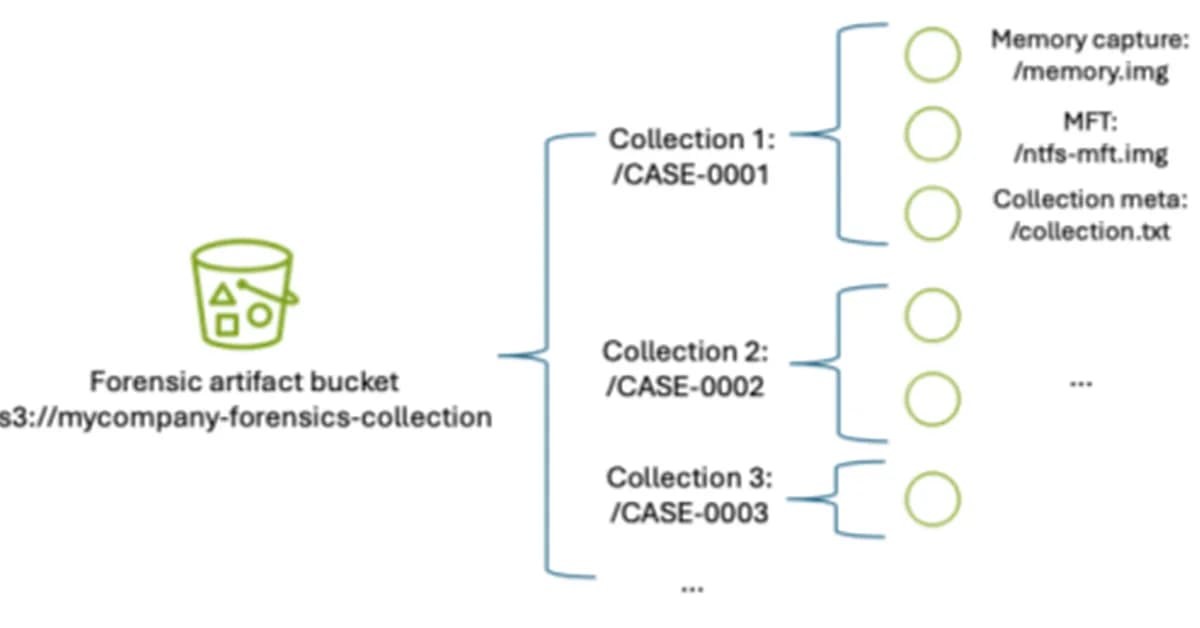
Based on the provided information, it seems like we're focusing on securing forensic evidence collection in AWS by adapting existing tools to use temporary, scoped-down credentials for uploading data into an S3 bucket. Here's a summary of key steps and considerations:
-
S3 Bucket Configuration:
- Create an S3 bucket named
mycompany-forensics-collection. - Enable versioning on the bucket.
- Configure server-side encryption with a customer-managed KMS key (
ForensicsEvidenceKey). - Turn on CloudTrail data logging for detailed audit logs.
- Create an S3 bucket named
-
IAM Policies:
- Define an IAM policy that allows uploading objects to specific prefixes in the S3 bucket, but restricts other actions.
json
1{ 2 "Sid": "UploadToCase0001", 3 "Effect": "Allow", 4 "Action": [ 5 "s3:PutObject", 6 "s3:AbortMultipartUpload" 7 ], 8 "Resource": "arn:aws:s3:::mycompany-forensics-collection/CASE-0001/*" 9} - Ensure the KMS key policy restricts access to only authorized users or
- Define an IAM policy that allows uploading objects to specific prefixes in the S3 bucket, but restricts other actions.
Read the full article at AWS Security Blog
Want to create content about this topic? Use Nemati AI tools to generate articles, social posts, and more.
2

Ali NematiWritten by Ali
![[AINews] The Unreasonable Effectiveness of Closing the Loop](/_next/image?url=https%3A%2F%2Fmedia.nemati.ai%2Fmedia%2Fblog%2Fimages%2Farticles%2F600e22851bc7453b.webp&w=3840&q=75)