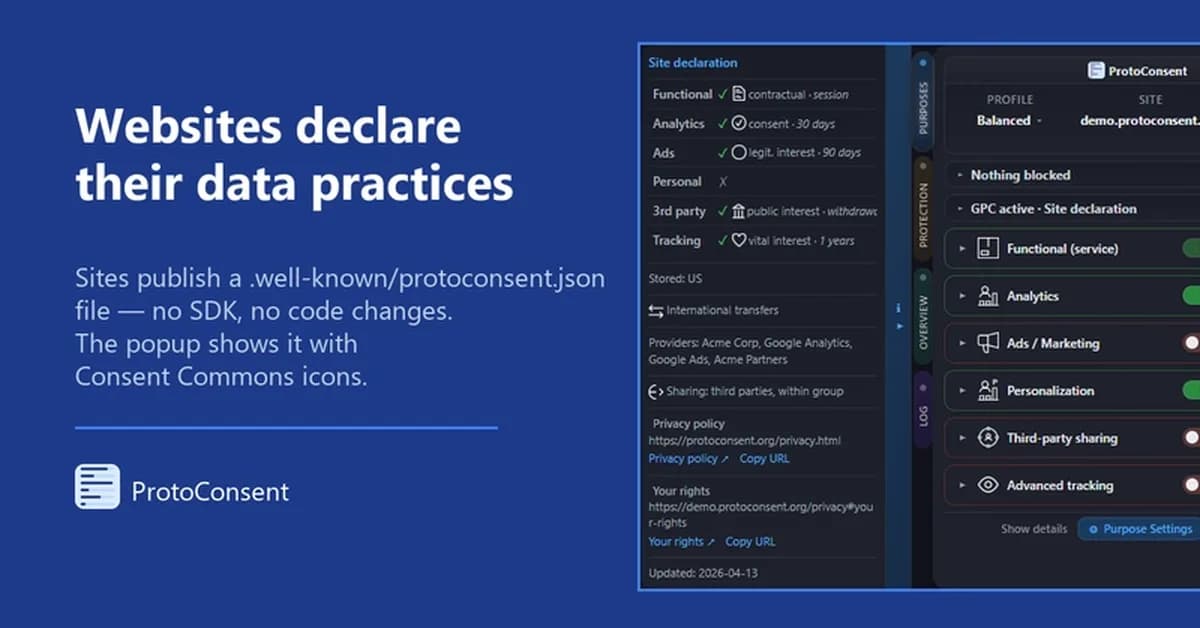
The .well-known/protoconsent.json file serves as a machine-readable transparency statement that websites can publish to inform users and browser extensions about their data handling practices, particularly regarding consent management and tracking. Here's a breakdown of its key components and how it works:
Key Components
-
Purpose Declarations:
- Each purpose (e.g.,
ads,personalization) has fields likeused(boolean),legal_basis(string), andretention(object). - Example:
"ads": { "used": true, "legal_basis": "consent", "retention": { "type": "fixed", "value": 6 } }
- Each purpose (e.g.,
-
Data Handling:
- Fields like
storage_region,international_transfers. - Example:
"data_handling": { "storage_region": "eu", "international_transfers": true }
- Fields like
-
Links:
- Links to privacy policy and user rights information.
- Example:
"links": { "policy": "https://example.com/privacy", "rights": "https://example.com/privacy#your-rights" }
How It Works
- Publishing
Read the full article at DEV Community
Want to create content about this topic? Use Nemati AI tools to generate articles, social posts, and more.
2
Contents

Ali NematiWritten by Ali
![[AINews] The Unreasonable Effectiveness of Closing the Loop](/_next/image?url=https%3A%2F%2Fmedia.nemati.ai%2Fmedia%2Fblog%2Fimages%2Farticles%2F600e22851bc7453b.webp&w=3840&q=75)