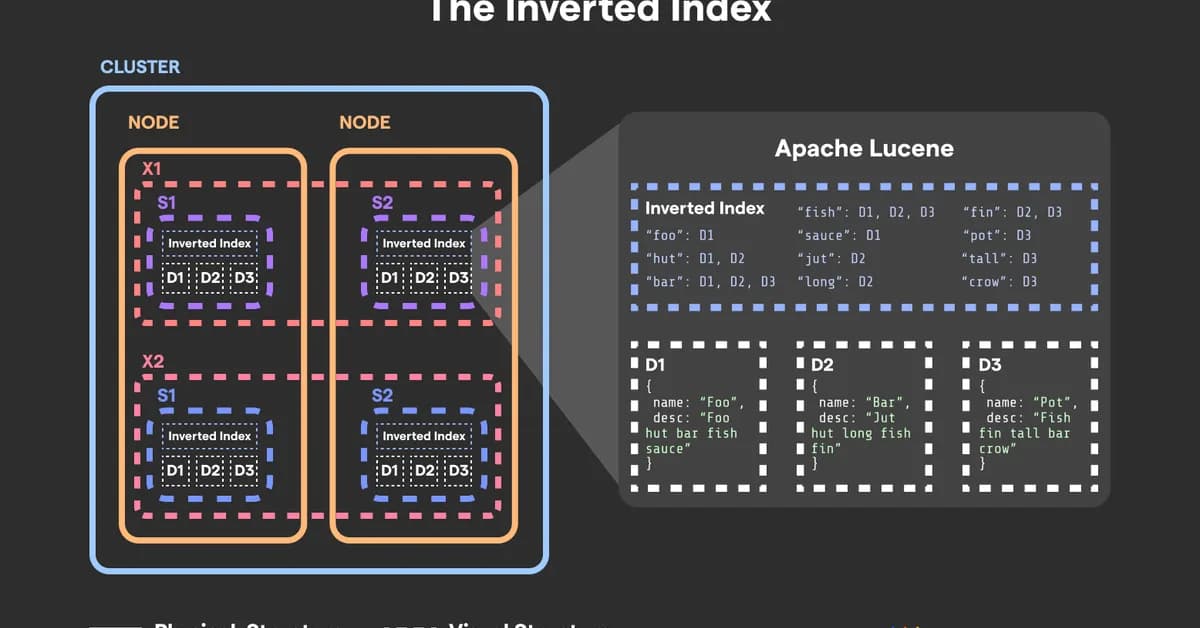
Based on your detailed explanation, it's clear that managing compression for inverted indexes involves understanding several key components and algorithms. Here’s a summary of the core points and some additional insights:
Key Components in an Inverted Index
- Terms Dictionary: A sorted list of unique tokens.
- Postings List: For each term, a list of document IDs (and optionally frequencies and positions).
- Skip Data: Sparse index over postings lists for efficient query evaluation.
Compression Techniques
Static vs Adaptive Compression
-
Static Compression:
- Treats the whole postings file as a byte stream.
- Uses general-purpose codecs like ZSTD or GZIP.
- Pros: Simple, good for cold storage.
- Cons: Needs to decompress entire segments for queries.
-
Adaptive Compression:
- Assigns a codec per block (e.g., 128 or 256 postings).
- Each block stores a header indicating the codec used and bitwidth.
- Pros: Random-access decompression, efficient query evaluation.
- Cons: Slightly higher space overhead due to headers.
Core Algorithms
- Variable-Byte (VByte):
Read the full article at DEV Community
Want to create content about this topic? Use Nemati AI tools to generate articles, social posts, and more.
2
Contents

Ali NematiWritten by Ali
![[AINews] The Unreasonable Effectiveness of Closing the Loop](/_next/image?url=https%3A%2F%2Fmedia.nemati.ai%2Fmedia%2Fblog%2Fimages%2Farticles%2F600e22851bc7453b.webp&w=3840&q=75)