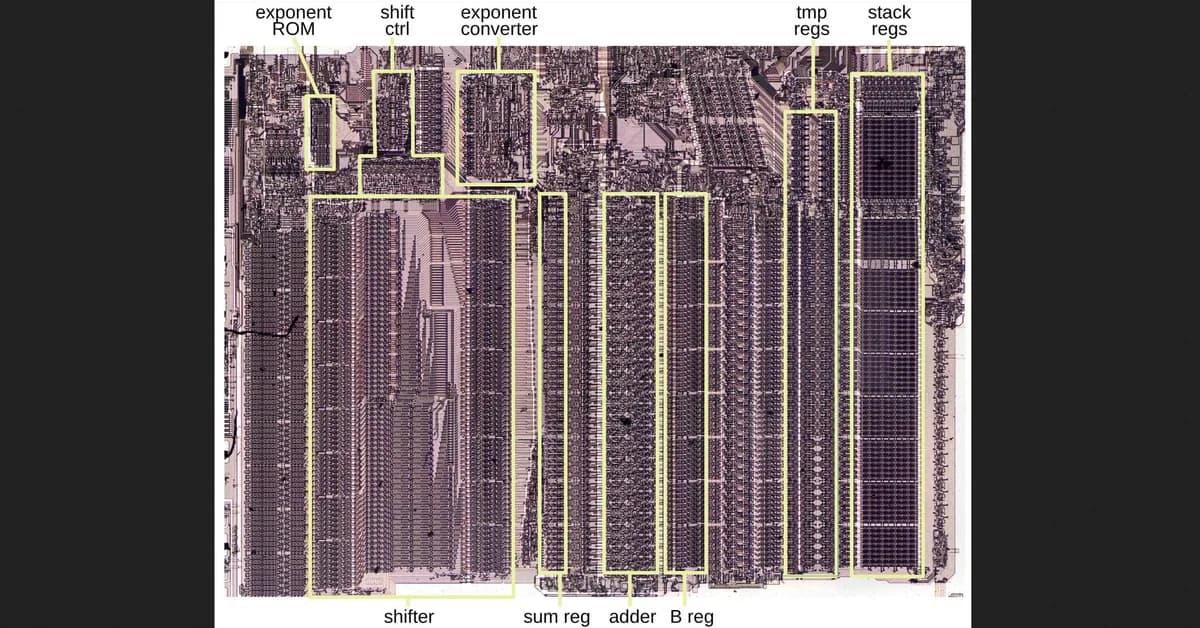
Analysis reveals Intel’s original 8087 floating-point unit's FSCALE instruction—used for scaling floating-point numbers—required an unexpectedly complex implementation involving over 140 micro-instructions and multiple subroutine calls. This highlights the intricate design choices within legacy hardware that underpin modern computing, offering valuable insight into the evolution of processor architecture and optimization techniques. Understanding these historical complexities can inform current efforts in reverse engineering and potentially inspire novel approaches to efficient floating-point processing.
Read the full article at Hackaday
Want to create content about this topic? Use Nemati AI tools to generate articles, social posts, and more.