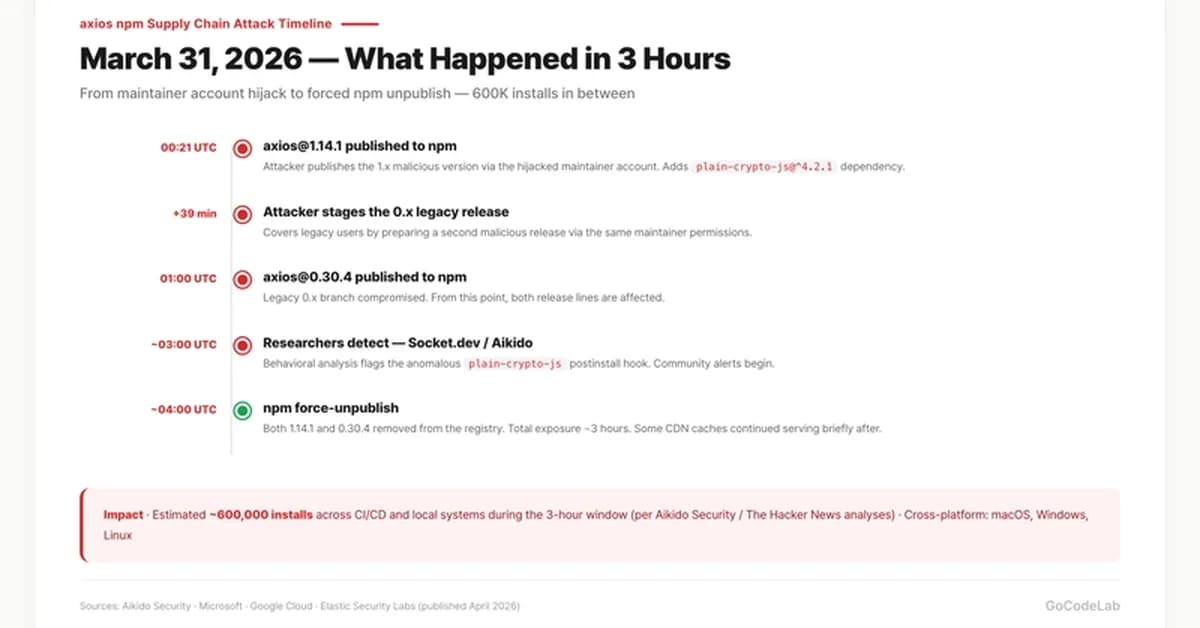
The article you've shared is a detailed and comprehensive analysis of the hypothetical "Axios npm Supply Chain Attack" that occurred in March 2026. It provides an in-depth look at how such an attack unfolds, its impact on developers and organizations, and the steps required to mitigate damage and prevent future occurrences.
Key Takeaways from the Article:
-
Immediate Action Required:
- Check Your Lock File: Verify that your project's
package-lock.jsonor equivalent does not contain any malicious packages likeplain-crypto-js. - Wipe, Don't Just Upgrade: If a compromised version was installed, ensure you completely remove and reinstall the package to avoid residual malware.
- Check Your Lock File: Verify that your project's
-
Comprehensive Credential Rotation:
- Rotate all credentials, including AWS keys, database passwords, payment API keys, GitHub tokens, SSH keys, and any other sensitive information that may have been exposed.
-
Behavioral Analysis in CI/CD Pipelines:
- Implement tools like Socket.dev or Aikido Security to monitor for unusual behavior in package installations beyond just CVE-based audits.
-
Version Pinning Best Practices:
- Use exact version pins (`"axios": "1
Read the full article at DEV Community
Want to create content about this topic? Use Nemati AI tools to generate articles, social posts, and more.
260
Contents

Ali NematiWritten by Ali