The article discusses the Radio Frequency 2.0 (RF 2.0) project, a European initiative aimed at making particle accelerators and their operations more sustainable from both an economic and environmental perspective. The project seeks to address two main issues: high energy consumption costs associated with running large-scale research infrastructures like CERN's Large Hadron Collider (LHC), which typically account for 5-10% of the annual budget, and the inflexibility and lack of environmental sustainability in these facilities.
Key Components of RF 2.0
Economic Efficiency
RF 2.0 aims to reduce energy consumption costs by developing and testing new technologies that can be implemented across various particle accelerators. For instance:
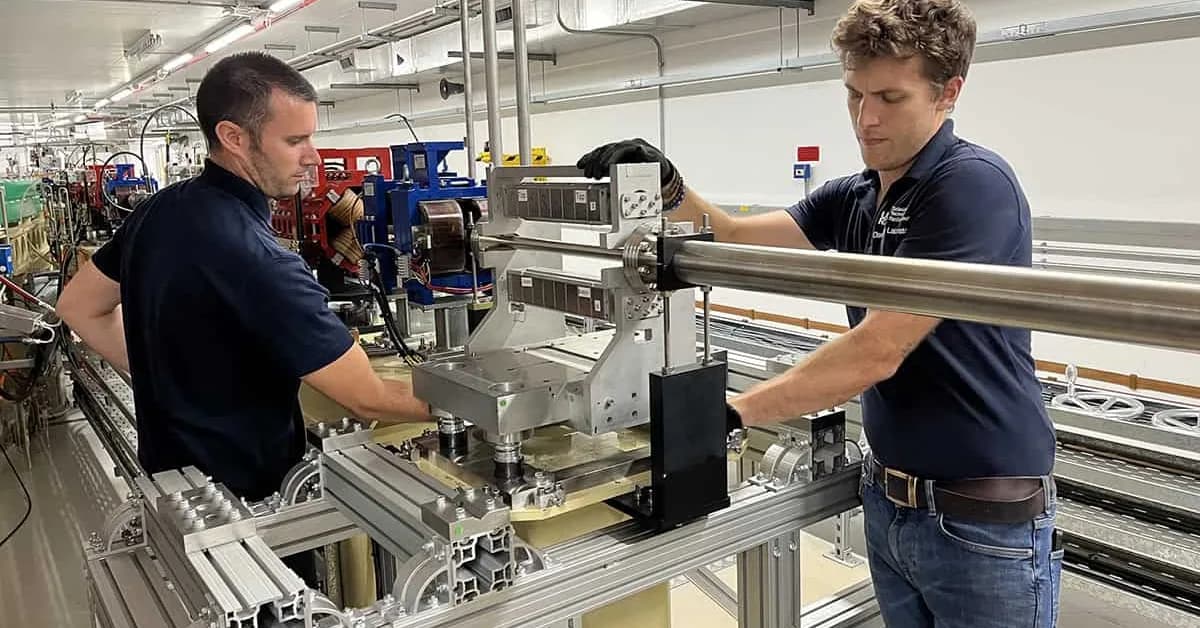
- Permanent Magnets: A demonstrator project at the MAX IV synchrotron in Sweden has led to a redesign of permanent magnets, reducing energy use and heat losses by up to 40%.
- Solid-State Amplifiers: At ALBA Synchrotron Light Facility in Spain, solid-state amplifiers with active parameterization controllers were installed, resulting in an 18% reduction in energy consumption.
Environmental Sustainability
The project also focuses on reducing the environmental impact of accelerators by
Read the full article at Environment and energy Archives – Physics World
Want to create content about this topic? Use Nemati AI tools to generate articles, social posts, and more.