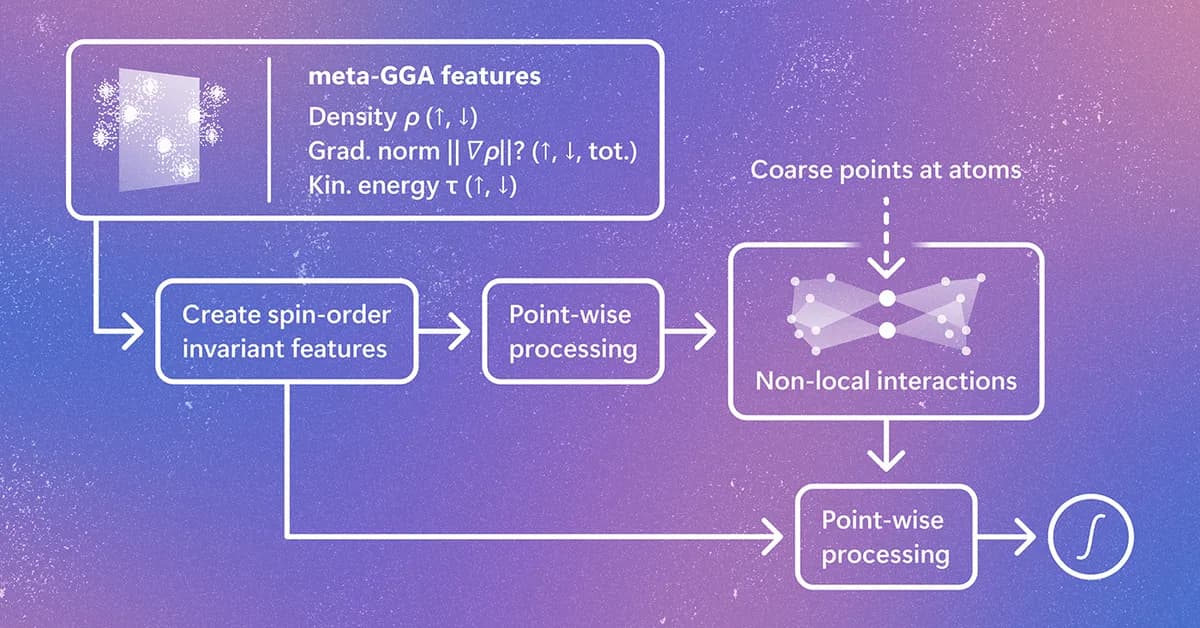
The Microsoft Research team recently released a new version of Skala, an advanced machine-learned exchange-correlation functional designed to enhance computational efficiency in density-functional theory (DFT) simulations while maintaining high accuracy. This release marks significant progress since the initial community release last year and includes several key developments:
-
Integration with CP2K: In collaboration with Prof. Thomas D. Kühne's team at CASUS, Skala has been successfully integrated into CP2K, a powerful open-source software package for DFT simulations. This integration extends CP2K's capabilities by delivering enhanced accuracy in DFT calculations while preserving computational efficiency.
-
Ongoing Integrations: Efforts are underway to integrate Skala with other major quantum chemistry packages such as Psi4 and FHI-aims, ORCA, and VASP. These integrations aim to make Skala broadly accessible across the electronic-structure software ecosystem used in computational chemistry and materials science.
-
Validation of Accuracy: To ensure consistent accuracy across different implementations and computational settings, a comprehensive suite of integration tests has been developed with the CP2K team. The validation process involves comparing results from the CP2K implementation with those from PySCF, demonstrating nearly identical outcomes
Read the full article at Microsoft Research
Want to create content about this topic? Use Nemati AI tools to generate articles, social posts, and more.