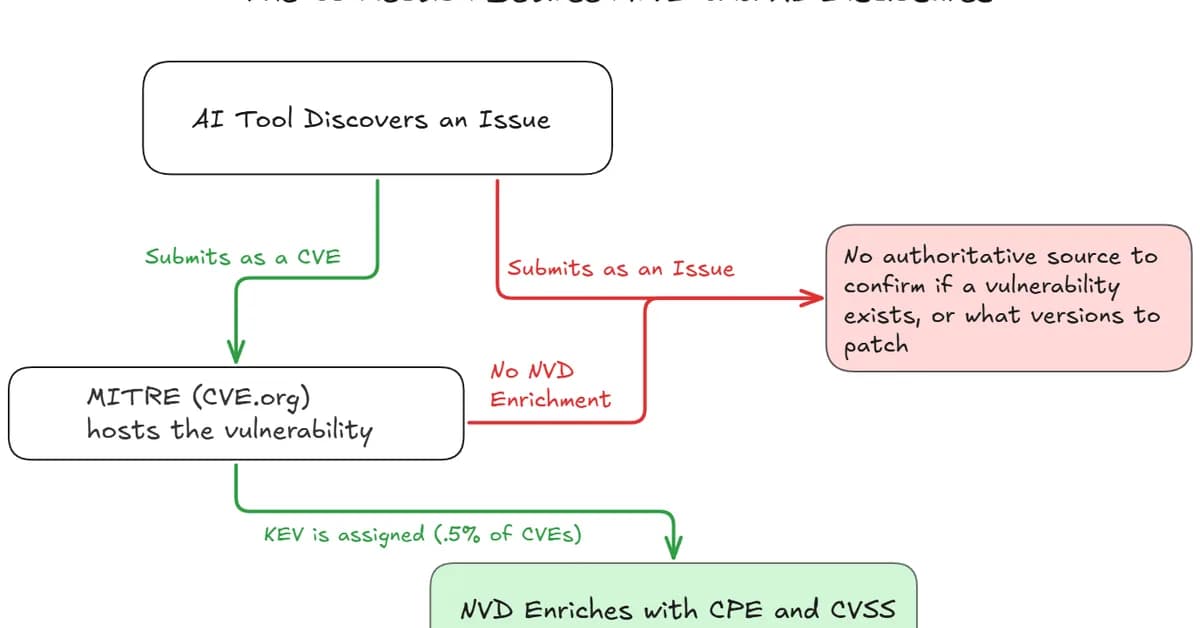
The article discusses significant changes in the Common Vulnerabilities and Exposures (CVE) ecosystem, driven by advancements like Claude Mythos, an AI tool capable of identifying zero-day vulnerabilities. These developments are causing a fragmentation within the CVE system, leading to less consistent and maintainable vulnerability data from the National Vulnerability Database (NVD). The primary concerns include:
-
Fragmentation in the CVE Ecosystem: With the rise in CVE disclosures and the potential misuse of AI tools like Claude Mythos, there is an increasing number of vulnerabilities that will not receive thorough evaluation by NVD due to its new policy focusing only on KEVs (Known Exploited Vulnerabilities) and critical software. This means a significant portion of newly discovered vulnerabilities, especially those in open-source software, might lack the detailed enrichment provided by NVD.
-
Impact on Security Programs: Many security teams rely heavily on CVE data for vulnerability management, prioritization, and risk reduction. With less reliable data from NVD, these teams will need to look elsewhere for more comprehensive and up-to-date information about vulnerabilities. This includes leveraging third-party sources that provide additional KEVs or other enrichment services.
-
Recommendations for Security Teams:
- **Low Risk
Read the full article at Latio Pulse
Want to create content about this topic? Use Nemati AI tools to generate articles, social posts, and more.