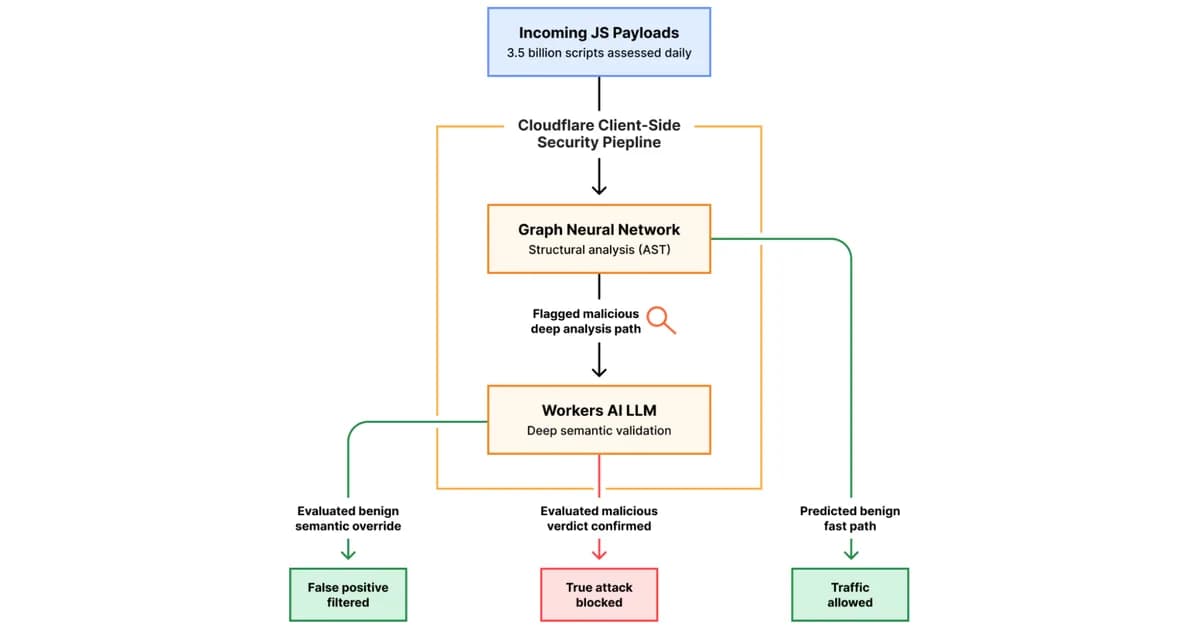
This article discusses several advancements in Cloudflare's Client-Side Security offerings, particularly focusing on how they leverage AI and threat intelligence to protect against client-side attacks. Here are some key points:
Enhanced Threat Detection with AI
-
Structural and Semantic Analysis: The system uses both structural (how the code is written) and semantic (what the code does) analysis to detect sophisticated threats that traditional signature-based Web Application Firewalls (WAFs) might miss.
-
Zero-Day Threats: It highlights a specific example of a zero-day threat targeting users' routers, demonstrating how AI can catch these advanced attacks.
-
Indicators of Compromise (IOCs): The article provides IOCs for the detected malicious activity, including URLs and C2 domains, which can help in identifying and mitigating the attack.
Domain-Based Threat Intelligence
-
Free Availability: Cloudflare is making domain-based threat intelligence available to all Client-Side Security customers, not just those with the Advanced offering. This move aims to provide small and medium-sized businesses with critical security signals.
-
Ease of Use: Customers can enable this feature via a simple toggle in their dashboard, which will highlight any JavaScript or connections associated with
Read the full article at The Cloudflare Blog
Want to create content about this topic? Use Nemati AI tools to generate articles, social posts, and more.

![[AINews] The Unreasonable Effectiveness of Closing the Loop](/_next/image?url=https%3A%2F%2Fmedia.nemati.ai%2Fmedia%2Fblog%2Fimages%2Farticles%2F600e22851bc7453b.webp&w=3840&q=75)