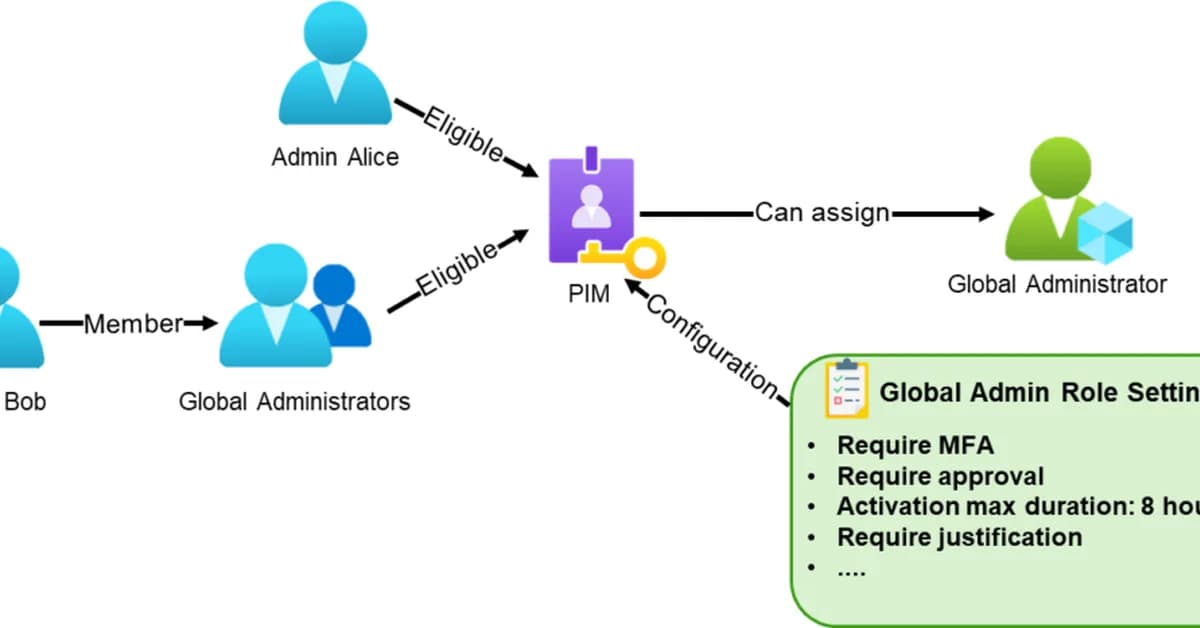
The examples provided illustrate the importance of robust security configurations, particularly when dealing with Privileged Identity Management (PIM) and Multi-Factor Authentication (MFA). Here are key takeaways from each example:
Example 1: PIM Role Activation Without MFA Enforcement
Scenario Overview:
- Alice obtains administrative privileges through a session that does not enforce MFA.
- An attacker steals tokens from this session, gaining access to powerful tokens without completing MFA.
Key Points:
-
MFA Requirement During Token Issuance:
- If the initial token issuance (e.g., for an admin portal) requires MFA, even if PIM does not enforce MFA during role activation, the attacker cannot obtain a powerful token initially.
-
PIM Role Activation Security:
- Enforcing re-authentication with MFA during PIM role activation significantly increases security by ensuring that only users who complete MFA can activate roles.
-
Token Lifetimes and Renewals:
- Limiting the lifetime of tokens through Conditional Access policies can prevent attackers from using stolen refresh tokens indefinitely.
-
Pre-Consented Permissions:
- Pre-consented permissions in tokens issued for
Read the full article at Compass Security Blog
Want to create content about this topic? Use Nemati AI tools to generate articles, social posts, and more.
4
Contents

Ali NematiWritten by Ali
![[AINews] The Unreasonable Effectiveness of Closing the Loop](/_next/image?url=https%3A%2F%2Fmedia.nemati.ai%2Fmedia%2Fblog%2Fimages%2Farticles%2F600e22851bc7453b.webp&w=3840&q=75)