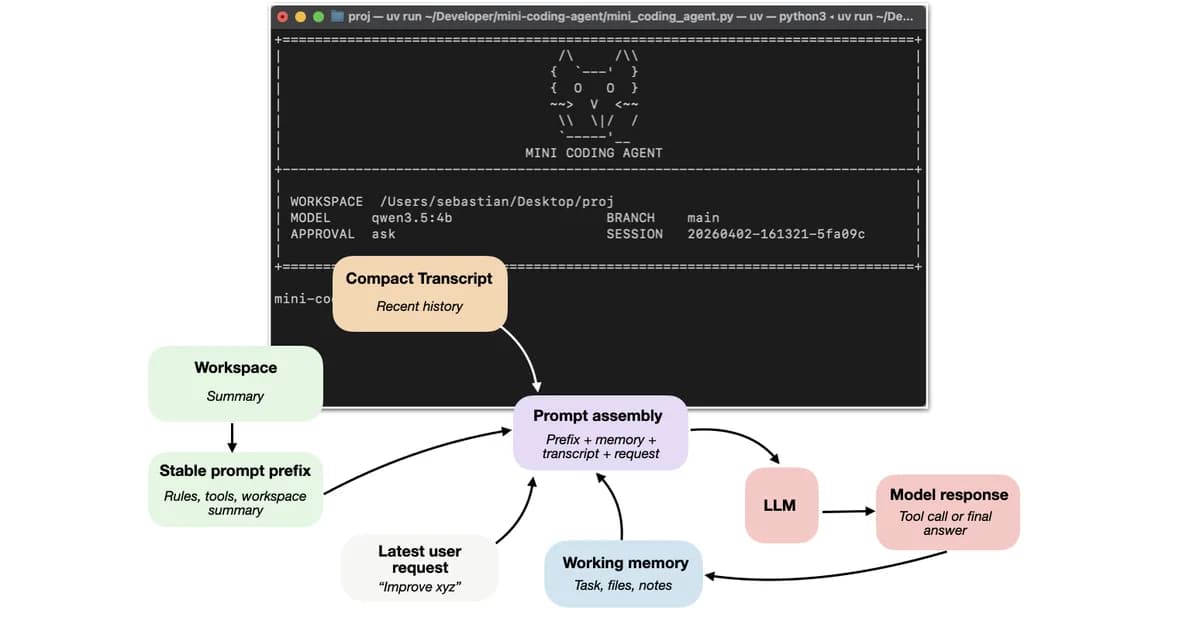
It sounds like you're discussing several key aspects of building an effective coding agent, particularly focusing on context management and tool integration. Let's break down the main points:
1. Minimizing Context Bloat
Context bloat is indeed a significant challenge for large language models (LLMs), especially in scenarios where long histories or extensive codebases need to be considered. Here are some strategies to mitigate this issue:
- Summarization: Use summarization techniques to condense lengthy logs, files, or previous interactions.
- Selective Context Inclusion: Only include relevant parts of the context that are necessary for the current task.
- Context Window Management: Manage the context window by rotating out older information as new data comes in.
2. Efficient Context Management
To handle large codebases and long interaction histories:
- Chunking: Break down large files or logs into smaller, manageable chunks.
- Indexing: Create an index of important sections or functions within the codebase for quick reference.
- Hierarchical Summarization: Use hierarchical summarization to create a multi-level summary where higher levels provide a more abstract view and lower levels contain detailed information.
3. **Tool Integration and Action
Read the full article at Ahead of AI
Want to create content about this topic? Use Nemati AI tools to generate articles, social posts, and more.
7
Contents

Ali NematiWritten by Ali
![[AINews] The Unreasonable Effectiveness of Closing the Loop](/_next/image?url=https%3A%2F%2Fmedia.nemati.ai%2Fmedia%2Fblog%2Fimages%2Farticles%2F600e22851bc7453b.webp&w=3840&q=75)