Today's lesson in the Django series focuses on integrating real database operations into our web application, specifically through models and migrations. Here’s a summary of what was covered:
Key Concepts Covered
-
Models:
- Models define the structure of data stored in the database.
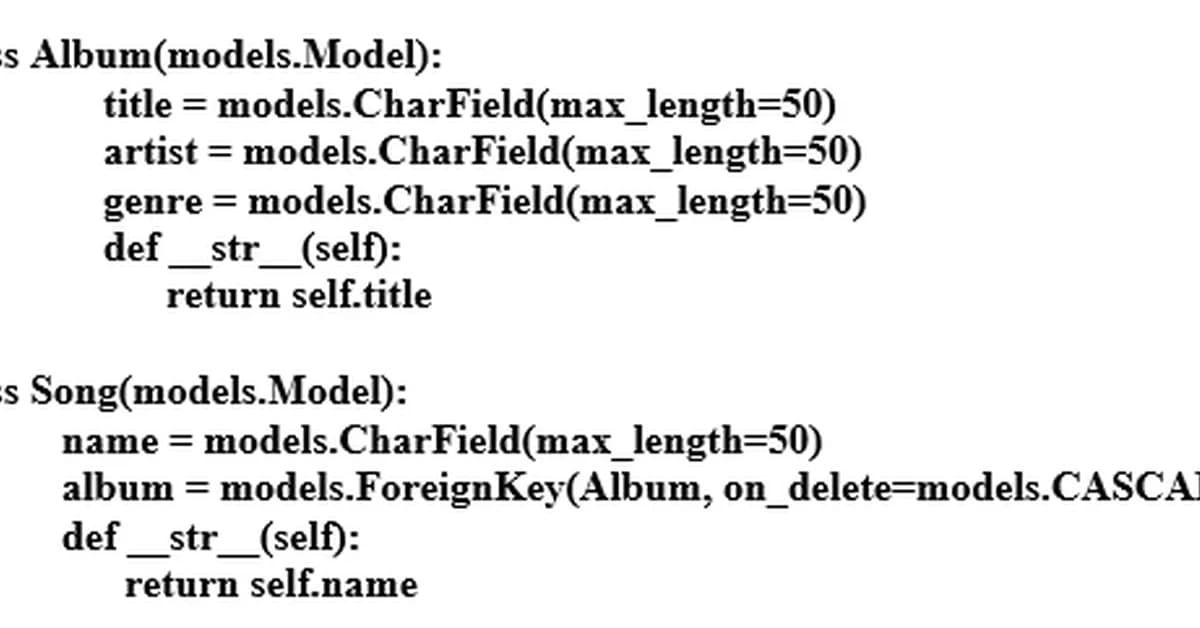
- Example model:
Postwith fields liketitle,content, andcreated_at.
-
Migrations:
- Migrations are used to apply changes made to models to the actual database schema.
- Running
makemigrationsgenerates migration files, andmigrateapplies them.
-
ORM (Object-Relational Mapping):
- Django's ORM allows you to interact with the database using Python code rather than SQL.
- Example:
Post.objects.filter(is_published=True).order_by('-created_at').
-
Admin Panel:
- The admin panel provides a user interface for managing data in your models without writing any additional views or templates.
-
Views and Templates:
- Views fetch real data from the database using ORM queries.
- Templates render this data into HTML, allowing dynamic content generation based on actual database entries.
Example Code
Models
Read the full article at DEV Community
Want to create content about this topic? Use Nemati AI tools to generate articles, social posts, and more.
2
Contents

Ali NematiWritten by Ali
![[AINews] The Unreasonable Effectiveness of Closing the Loop](/_next/image?url=https%3A%2F%2Fmedia.nemati.ai%2Fmedia%2Fblog%2Fimages%2Farticles%2F600e22851bc7453b.webp&w=3840&q=75)