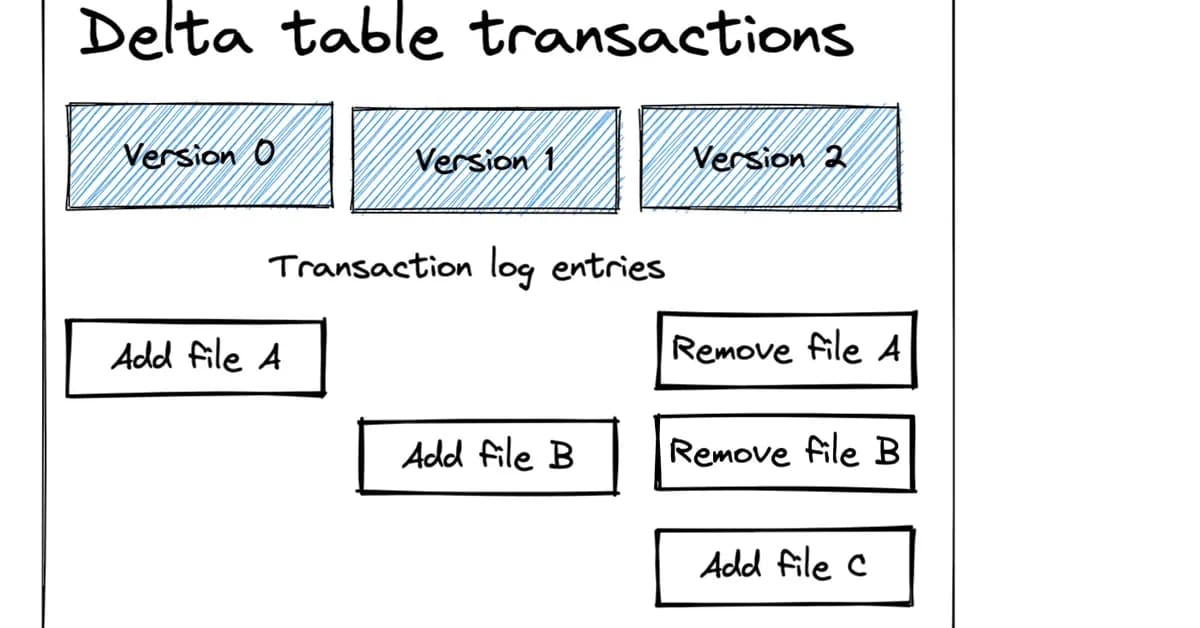
Optimizing Delta Tables
As your Delta Lake grows in size and complexity, optimizing its performance becomes crucial to ensure efficient storage and query execution. Here’s a guide on how to optimize Delta tables:
1. Compaction
Delta Lake automatically manages data files through a process called compaction. Compaction merges small files into larger ones, reducing the number of files and improving read performance.
-
Manual Compaction: You can manually trigger compactions using the
VACUUMcommand or by setting up automatic compaction policies.python1# Manual VACUUM to compact data files 2delta_table.vacuum(retentionHours=24)sql1-- SQL equivalent for manual vacuum 2VACUUM sales_silver RETENTION HOURS = 24; -
Retention Policies: You can configure retention policies to automatically manage old data files.
python1# Configure automatic retention policy 2delta_table.vacuum(retentionHours=7 * 24)
2. Z-ordering
Z-ordering is a technique that reorganizes the data in Delta tables based on specific columns
Read the full article at DEV Community
Want to create content about this topic? Use Nemati AI tools to generate articles, social posts, and more.

![[AINews] The Unreasonable Effectiveness of Closing the Loop](/_next/image?url=https%3A%2F%2Fmedia.nemati.ai%2Fmedia%2Fblog%2Fimages%2Farticles%2F600e22851bc7453b.webp&w=3840&q=75)