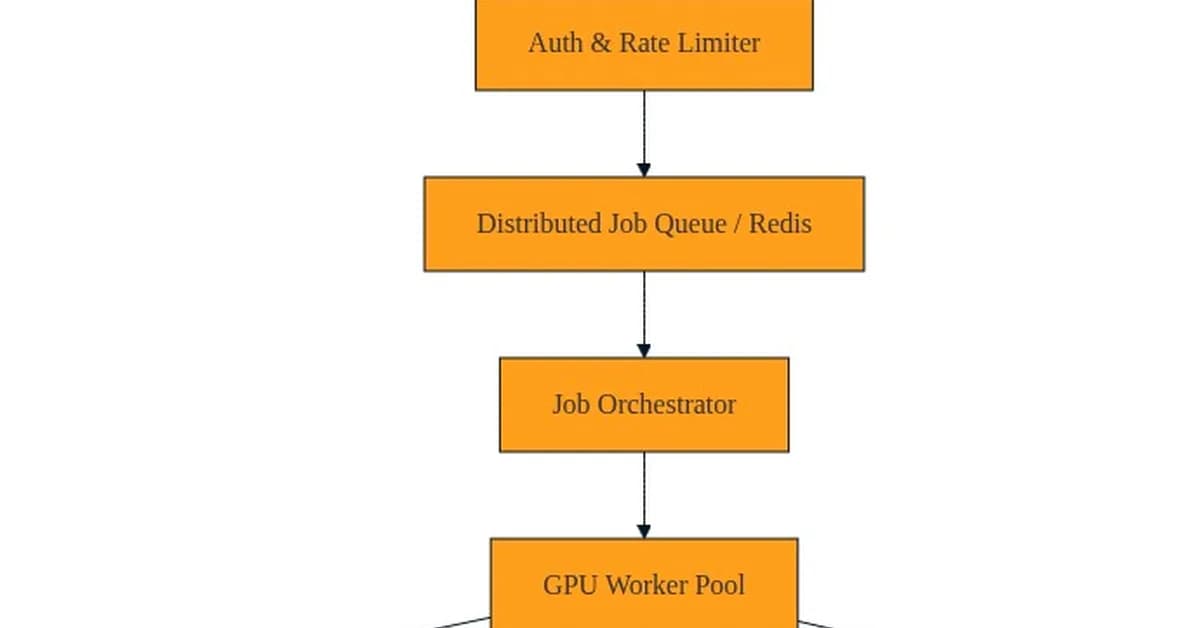
Key Insights on Scaling Generative AI Systems
Scaling a generative AI system, particularly one that involves video generation using large models like Stable Diffusion or DALL-E, presents unique challenges and opportunities. Here are the key takeaways from this deep dive into the architecture, data flow, and scaling strategies for such systems.
Architecture Overview
-
Job-Queue-Worker Pattern:
- Never use synchronous APIs: Implement a Job-Queue-Worker pattern to manage asynchronous requests efficiently.
- Components:
- Prompt Processor: Cleans input, applies safety filters, and expands prompts if necessary.
- Sampling Loop: Iteratively removes noise from latent representations using techniques like FlashAttention for memory optimization.
- VAE Decoder: Converts latent space back into pixel data.
-
Data Flow Lifecycle:
- Input Processing: Clean and filter the input prompt.
- Diffusion Process: Iterative sampling to remove noise from a latent representation.
- Decoding: Use VAE to decode latents into actual pixels.
Scaling Strategies
- Latency vs. Throughput:
- Continuous Batching: Slot new requests into the GPU's processing
Read the full article at DEV Community
Want to create content about this topic? Use Nemati AI tools to generate articles, social posts, and more.
6
Contents

Ali NematiWritten by Ali
![[AINews] The Unreasonable Effectiveness of Closing the Loop](/_next/image?url=https%3A%2F%2Fmedia.nemati.ai%2Fmedia%2Fblog%2Fimages%2Farticles%2F600e22851bc7453b.webp&w=3840&q=75)