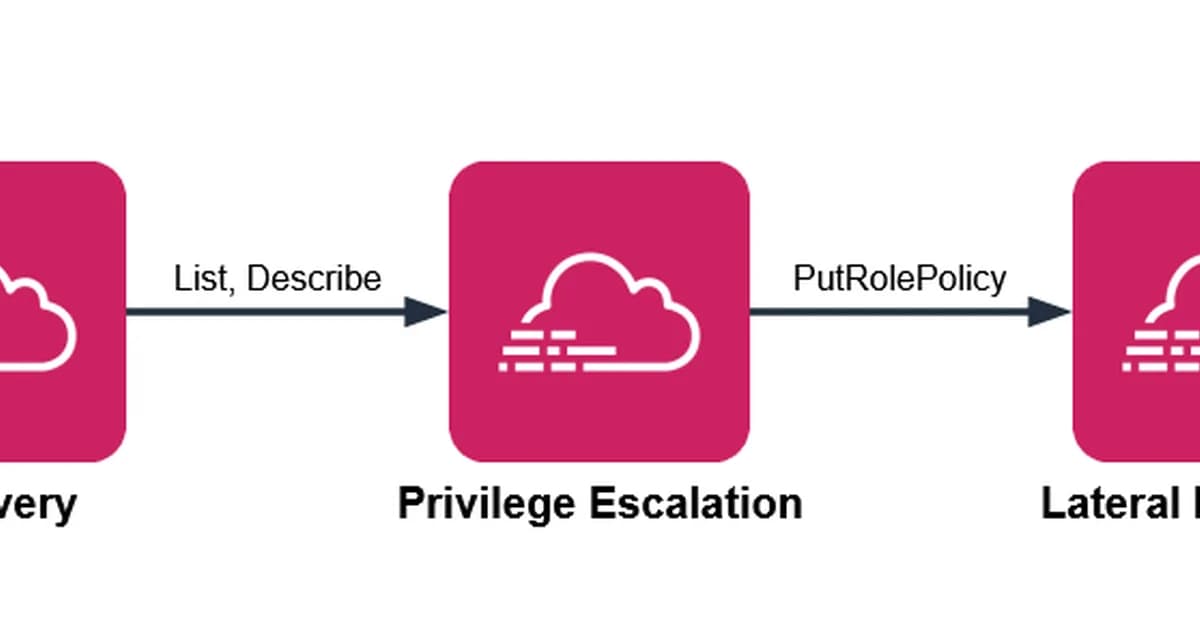
The pattern you're describing is an excellent way to detect potential privilege escalation or lateral movement attacks in AWS environments. By leveraging your organization's trust topology and access policies, this approach can help identify anomalous behavior that might indicate malicious activity.
Here’s how the second pattern works:
Pattern Two: A Role Chain That Crosses Your Access Policy
Conditions:
- Multiple
AssumeRoleCalls: CloudTrail logs show several consecutiveAssumeRolecalls from the same principal within a short time window. - Unusual Trust Relationships: The sequence of roles being assumed does not align with your organization's defined trust relationships or access policies.
Steps to Implement:
-
Define Your Trusted Role Chains:
- Create a list of trusted role chains that are allowed in your environment based on your security and operational requirements.
- For example, if
RoleAis expected to assumeRoleB, which then assumesRoleC, this sequence should be documented.
-
Monitor for Anomalous Chains:
- Use CloudTrail logs to detect sequences of
AssumeRolecalls that do not match your defined trusted role chains.
- Use CloudTrail logs to detect sequences of
-
**Correlate with Other Logs (
Read the full article at AWS Security Blog
Want to create content about this topic? Use Nemati AI tools to generate articles, social posts, and more.
Views0
On this page

Ali NematiBlogUI.author_articles