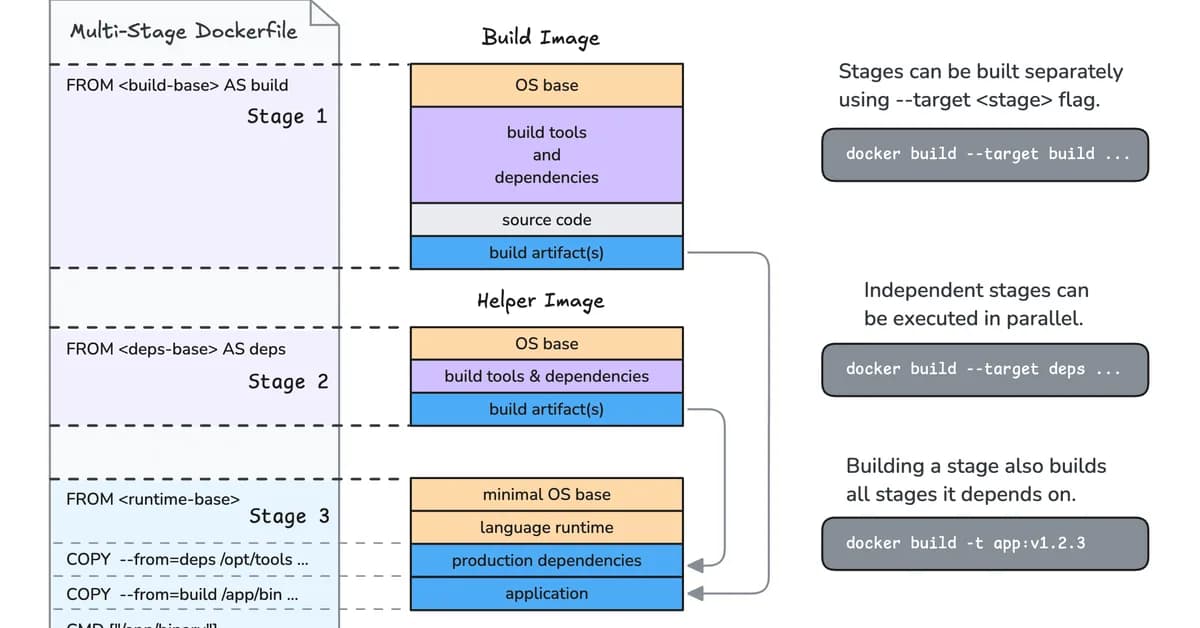
It looks like you have a comprehensive guide on using Docker multi-stage builds to optimize your Go application. Let's break down each part of this example, ensuring clarity and completeness.
Step-by-Step Guide
1. Application Code (main.go)
Your main.go file sets up a simple HTTP server that responds with the version number passed as an environment variable:
go1package main 2 3import ( 4 "fmt" 5 "log" 6 "net/http" 7 "os" 8) 9 10func main() { 11 http.HandleFunc("/", func(w http.ResponseWriter, r *http.Request) { 12 appVersion := os.Getenv("APP_VERSION") 13 if appVersion == "" { 14 appVersion = "unknown" 15 } 16 fmt.Fprintf(w, "Hello from Go, version %s!\n", appVersion) 17 }) 18 19 port := os.Getenv("PORT") 20 if port == "" { 21 port = "8080" 22 } 23 log.Printf("Server starting on port %s...", port) 24 log.Fatal(http.ListenAndServe(":"+port, nil)) 25}
2. Dockerfile
Your Dockerfile is divided into two stages: a build stage and a release/runtime stage.
Build Stage
Read the full article at DEV Community
Want to create content about this topic? Use Nemati AI tools to generate articles, social posts, and more.
2
Contents

Ali NematiWritten by Ali
![[AINews] The Unreasonable Effectiveness of Closing the Loop](/_next/image?url=https%3A%2F%2Fmedia.nemati.ai%2Fmedia%2Fblog%2Fimages%2Farticles%2F600e22851bc7453b.webp&w=3840&q=75)