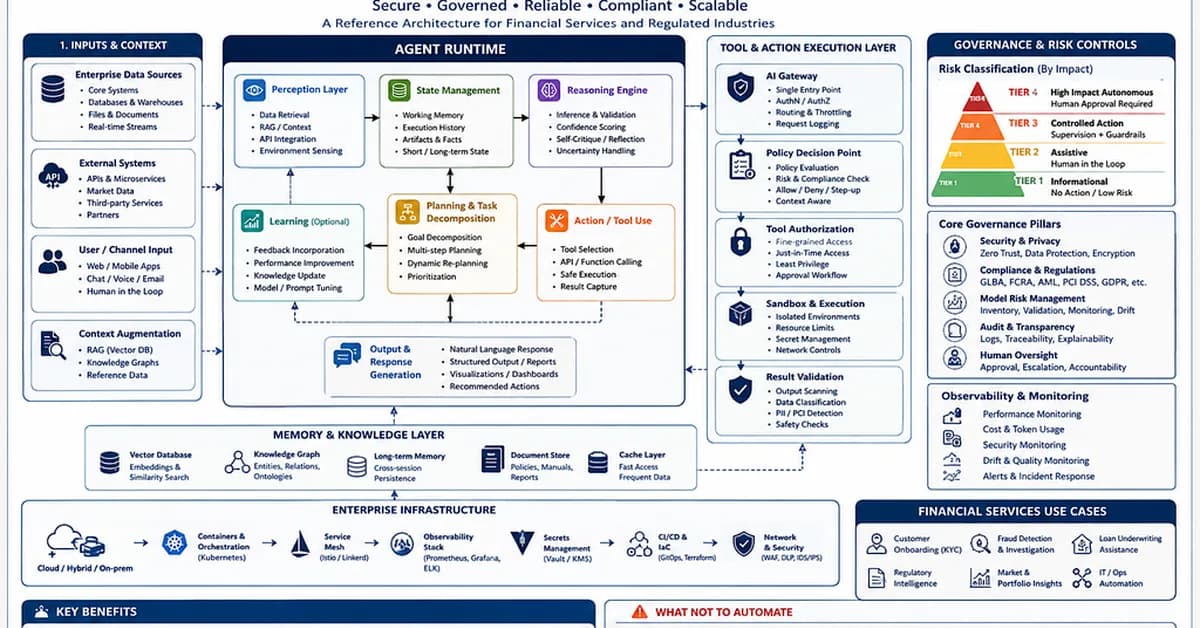
It looks like you've provided a detailed architecture and implementation sketch for an AI agent system, including memory management, security policies, and risk assessment mechanisms. Let's break down the key components and ensure they align with best practices in enterprise security and compliance.
Part 1: Memory Management
Semantic Memory vs Episodic Memory
Your approach to separating semantic and episodic memories is sound for long-term storage of knowledge versus recent experiences. This separation allows for more efficient querying and management of different types of data.
Data Storage Implementation
The store_experience method correctly captures the essence of storing both execution traces (episodic memory) and embeddings (semantic memory). The use of provenance information is crucial for auditing and compliance purposes.
Part 2: Memory Governance Requirements
Your list of governance requirements is comprehensive:
- TTL Policies: Ensure data isn't stored indefinitely.
- User/Tenant Isolation: Prevent cross-user data leakage.
- Deletion Workflows: Define clear processes for data removal based on policy or user request.
- Poisoning Detection: Monitor and detect malicious input affecting model performance.
- Access Control: Implement strict controls over who can access what data.
- **Compliance Retention
Read the full article at Towards AI - Medium
Want to create content about this topic? Use Nemati AI tools to generate articles, social posts, and more.