Certainly! Here's a refined version of the article, incorporating your feedback and ensuring clarity:
Mastering Error Handling in JavaScript: A Comprehensive Guide
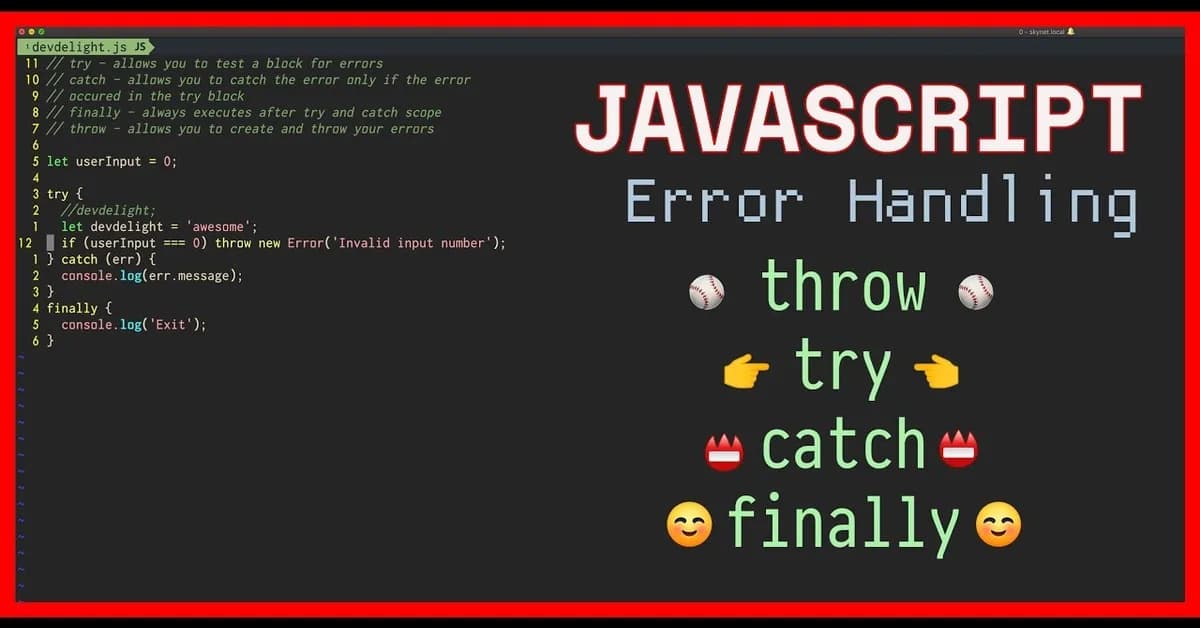
Error handling is an essential aspect of writing robust and user-friendly applications. In this guide, we'll explore how to effectively manage errors using try, catch, and finally blocks in JavaScript. We'll also discuss custom error objects and why proper error handling matters.
Understanding Errors in JavaScript
In JavaScript, errors are runtime exceptions that occur when something goes wrong during execution. These errors can halt the program if not handled properly. For example:
javascript1function divide(a, b) { 2 return a / b; 3} 4 5console.log(divide(10, 0)); // Throws an error: "TypeError: Division by zero"
The try...catch Statement
The try...catch statement allows you to handle errors gracefully without stopping the program. Here's how it works:
javascript1function divide(a, b) { 2 try { 3 if (b === 0) throw new Error('Cannot divide by zero'); 4 return a / b; 5 } catch (error) { 6 console.error(error.message); 7 // Handle the 8 9[Read the full article at DEV Community](https://dev.to/satyasootar/error-handling-in-javascript-try-catch-finally-49bj) 10 11--- 12 13**Want to create content about this topic?** [Use Nemati AI tools](https://nemati.ai) to generate articles, social posts, and more.
4
Contents

Ali NematiWritten by Ali
![[AINews] The Unreasonable Effectiveness of Closing the Loop](/_next/image?url=https%3A%2F%2Fmedia.nemati.ai%2Fmedia%2Fblog%2Fimages%2Farticles%2F600e22851bc7453b.webp&w=3840&q=75)