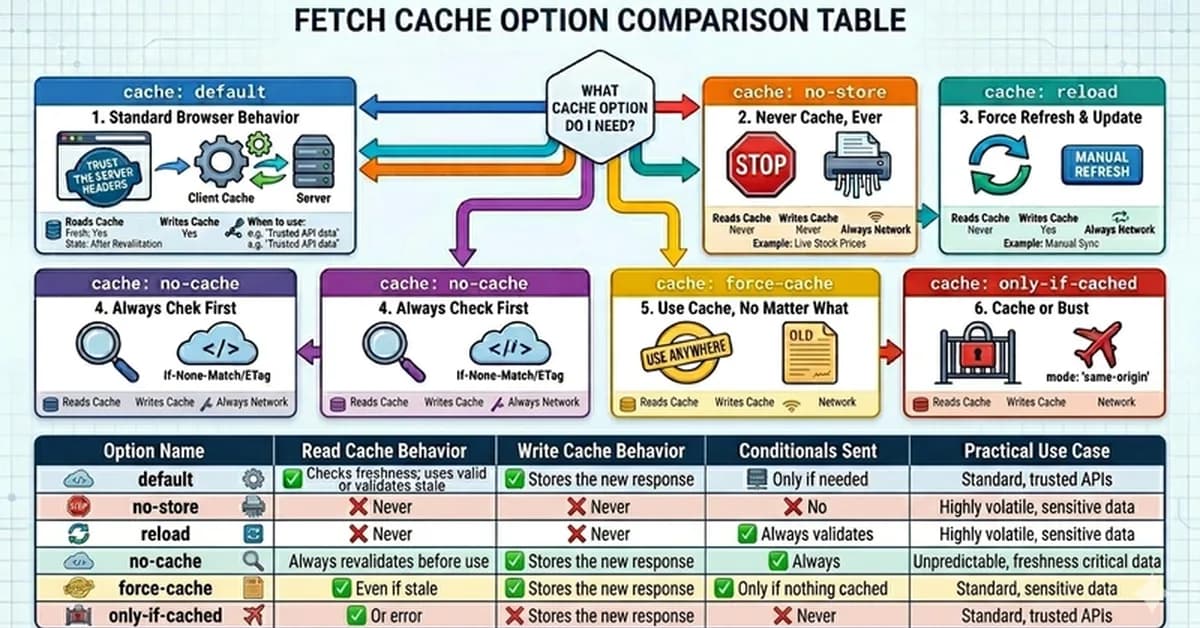
The cache option in the fetch() API allows you to control how and when cached responses are used. Here’s a detailed breakdown of each cache mode and their use cases:
1. 'default' (or 'no-cache')
- Behavior: The browser will revalidate any cached response with the server before using it.
- Use Case: When you need to ensure that the data is up-to-date but still want to minimize network requests by leveraging cache when possible.
2. 'no-store'
- Behavior: This mode prevents caching of responses entirely, ensuring that every request goes directly to the server and no cached response is used.
- Use Case: For real-time data or highly sensitive information where staleness cannot be tolerated.
3. 'reload'
- Behavior: Forces a network request even if there’s a valid cache entry available, ensuring that you always get fresh data from the server.
- Use Case: When absolute freshness of data is critical and you want to bypass any cached responses.
4. 'no-cache' (or 'default')
- Behavior: The browser will
Read the full article at DEV Community
Want to create content about this topic? Use Nemati AI tools to generate articles, social posts, and more.
2
Contents

Ali NematiWritten by Ali
![[AINews] The Unreasonable Effectiveness of Closing the Loop](/_next/image?url=https%3A%2F%2Fmedia.nemati.ai%2Fmedia%2Fblog%2Fimages%2Farticles%2F600e22851bc7453b.webp&w=3840&q=75)