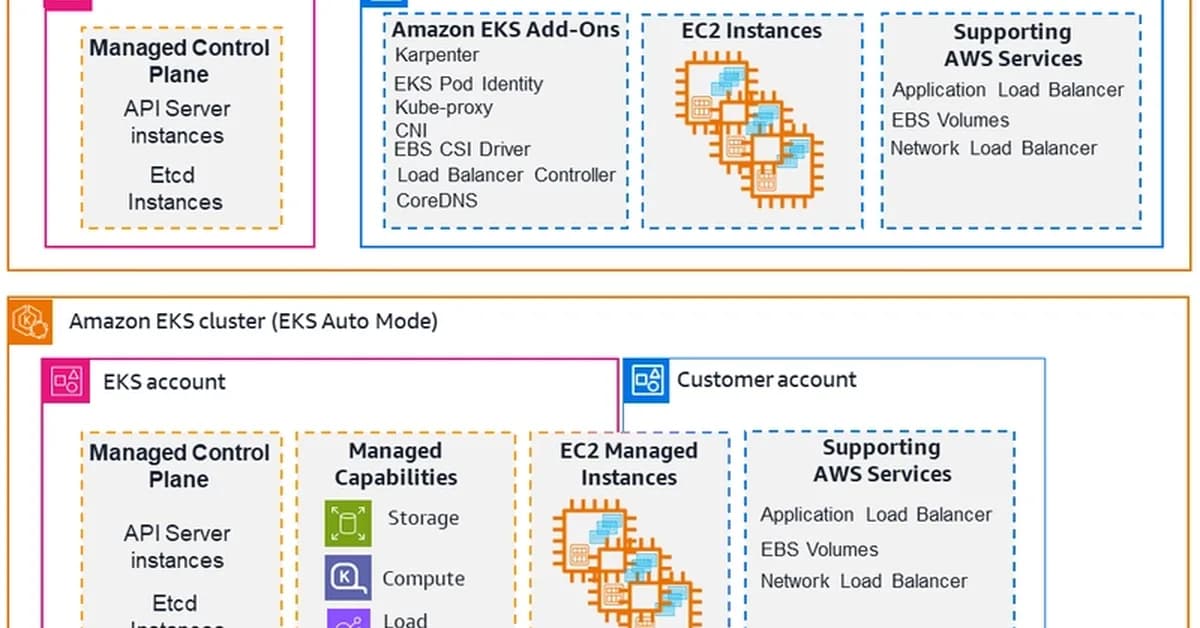
Based on the content provided, here's a summary of key points to consider when deciding between EKS Standard and Auto Mode:
Key Considerations
EKS Auto Mode
- Quick Setup: Ideal for small teams looking to quickly set up a standard container platform.
- Typical Workloads: Suitable if your workloads are typical Linux containers without exotic kernel, sysctl, or custom AMI requirements today.
- AWS-Shaped APIs: Comfortable adopting AWS-specific APIs and integrations as you grow.
- Fewer Moving Parts: Prefer fewer components to patch and tune in the first year.
EKS Standard
- Maximum Transparency: Ideal for teams that need maximum transparency into every layer, e.g., training, compliance groundwork, or multi-cloud discipline.
- Specific Requirements: Suitable if you already know specific instance families, purchase options, or strict cost caps from day one.
- Custom Node Provisioning: Prefer to standardize on an in-house or community node provisioning story and learn it without additional management layers.
Decision Rubric (Greenfield, No Baggage)
- Lean towards EKS Auto Mode if:
- Team is small and priority
Read the full article at DEV Community
Want to create content about this topic? Use Nemati AI tools to generate articles, social posts, and more.
Views201
On this page

Ali NematiBlogUI.author_articles