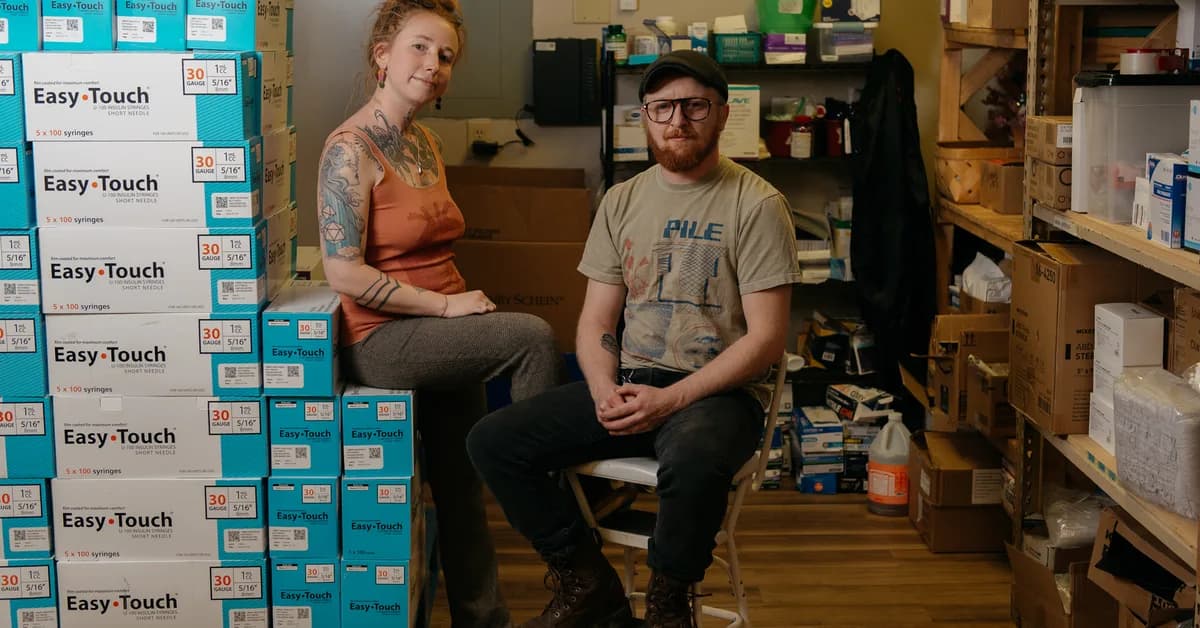
The article discusses the challenges faced by individuals with substance use disorders during natural disasters like Hurricane Helene, which hit western North Carolina. It highlights the efforts of harm reduction groups such as Holler Harm Reduction, Steady Collective, and Smoky Mountain Harm Reduction to support these individuals amidst disruptions caused by flooding and power outages.
Key points include:
-
Disruptions in access to medications: Flooding made it difficult for people to reach clinics or refill prescriptions for methadone and Suboxone, which are crucial for treating opioid addiction.
-
Community support: Local harm reduction groups mobilized quickly after the storm to distribute supplies like Naloxone (Narcan) and drug testing kits, providing mutual aid and emotional support to those in need.
-
Scrappy survival skills: Individuals with substance use disorders were accustomed to navigating system failures and had developed coping mechanisms that helped them survive during the crisis.
-
Role of state officials: Tyler Yates, the North Carolina opioid coordinator, worked to address urgent needs but faced challenges due to bureaucratic obstacles.
-
Importance of mutual aid networks: The article emphasizes how harm reduction groups provided essential support and compassion to individuals struggling with substance use disorders during the disaster.
-
Long-term implications: The
Read the full article at Grist
Want to create content about this topic? Use Nemati AI tools to generate articles, social posts, and more.