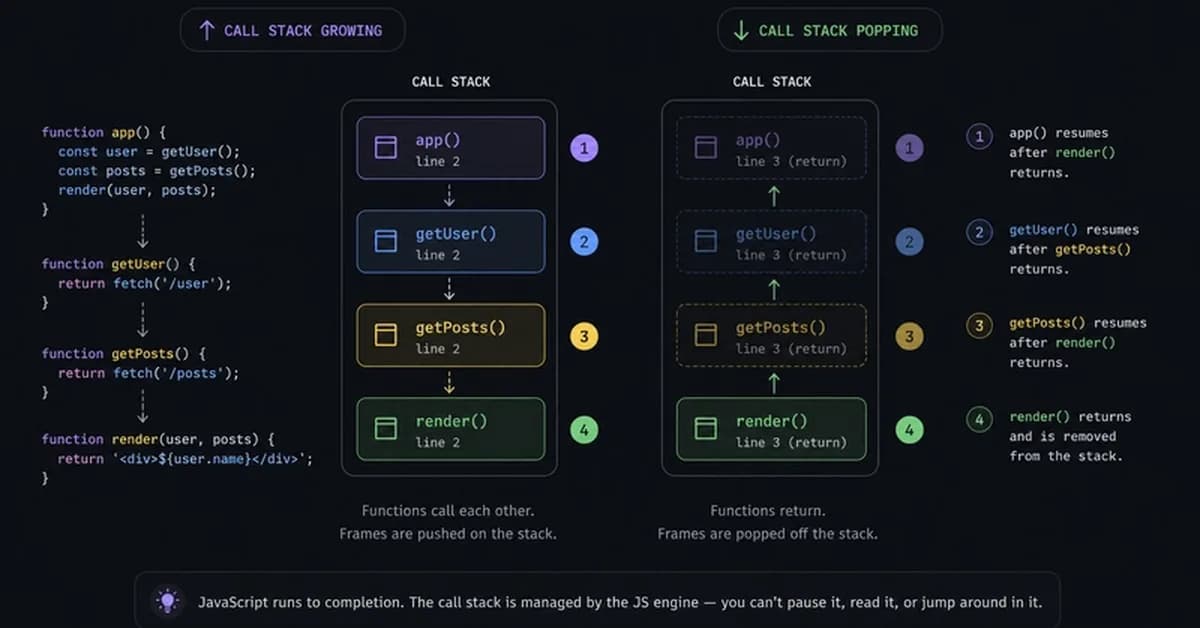
The article provides a detailed explanation of how React's internal architecture, specifically its Scheduler and Reconciler components, enables efficient and responsive user interfaces. Here are the key points:
-
Problem with JavaScript Call Stack: Traditional rendering in React was done using a continuous chain of function calls (JavaScript call stack). This approach is simple but doesn't allow for interruptible or prioritized rendering, which modern applications require.
-
Introduction of Fiber Architecture:
- Fiber Nodes: React introduced a tree structure made up of plain JavaScript objects called "fibers." Each fiber acts like a stack frame that the React engine can control.
- Two Trees: React maintains two versions of the component tree at all times: the current tree (what's currently displayed) and the work-in-progress tree (being built for the next render). This ensures that rendering doesn't disrupt what is shown on screen.
-
Scheduler:
- The Scheduler module decides when and in what order to run tasks.
- It can pause, resume, prioritize, or abort rendering based on the current context and incoming updates.
- Prioritization: React can switch to handling higher-priority tasks (like user input) before completing lower-p
Read the full article at DEV Community
Want to create content about this topic? Use Nemati AI tools to generate articles, social posts, and more.
4

Ali NematiWritten by Ali
![[AINews] The Unreasonable Effectiveness of Closing the Loop](/_next/image?url=https%3A%2F%2Fmedia.nemati.ai%2Fmedia%2Fblog%2Fimages%2Farticles%2F600e22851bc7453b.webp&w=3840&q=75)