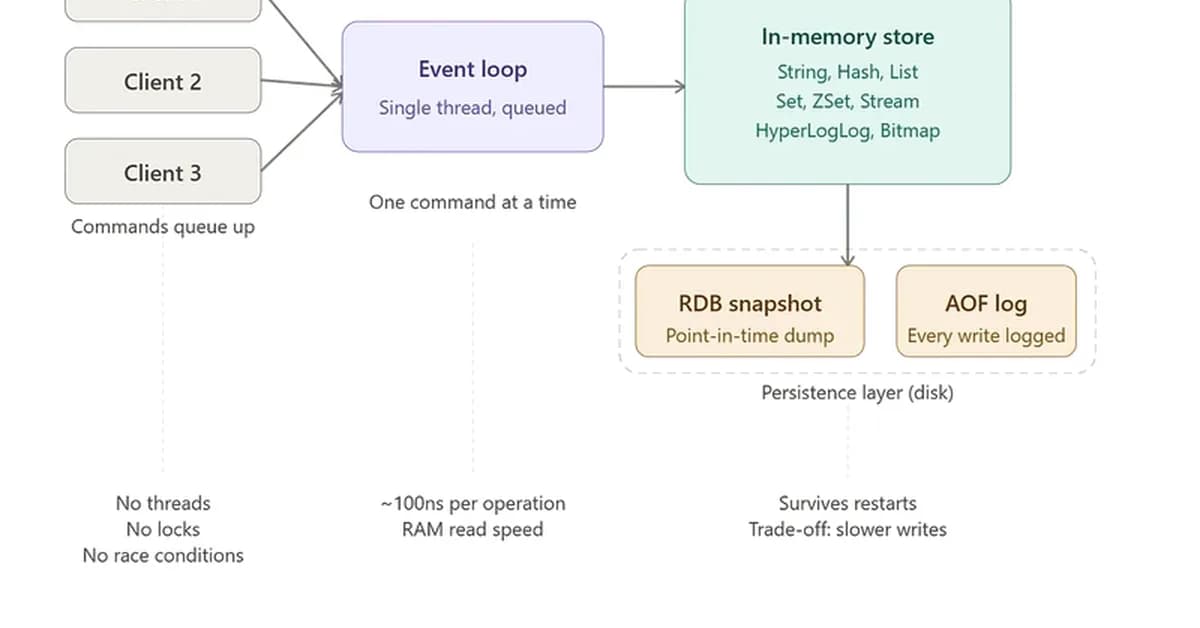
/no/ appears to be an incomplete or incorrectly formatted query. If you're looking for information about Redis, here's a summary based on the content provided:
Key Points About Redis
-
Expiration and Cleanup:
- Redis does not automatically clean up expired keys immediately; instead, it uses background processes like
expirecommands to manage key expiration. - Keys are cleaned up when they are accessed or during periodic scans by the server.
- Redis does not automatically clean up expired keys immediately; instead, it uses background processes like
-
Rate Limiting with Sorted Sets:
- A common use case for Redis is implementing rate limiting using sorted sets (ZSets).
- The timestamp can be used as a score in ZSets to track requests within a time window.
- Example code snippet provided shows how to implement this by removing old entries and counting current ones.
-
Best Practices:
- Don't Use Redis as Primary Database: It lacks features like foreign keys, joins, and complex queries that are necessary for relational data management.
- Avoid Large Values: Store small, hot data in Redis; large values can lead to inefficient memory usage and performance bottlenecks.
- Pub/Sub for Non-Critical Data Only: Use Redis pub/sub only for non-critical
Read the full article at DEV Community
Want to create content about this topic? Use Nemati AI tools to generate articles, social posts, and more.
8
Contents

Ali NematiWritten by Ali
![[AINews] The Unreasonable Effectiveness of Closing the Loop](/_next/image?url=https%3A%2F%2Fmedia.nemati.ai%2Fmedia%2Fblog%2Fimages%2Farticles%2F600e22851bc7453b.webp&w=3840&q=75)