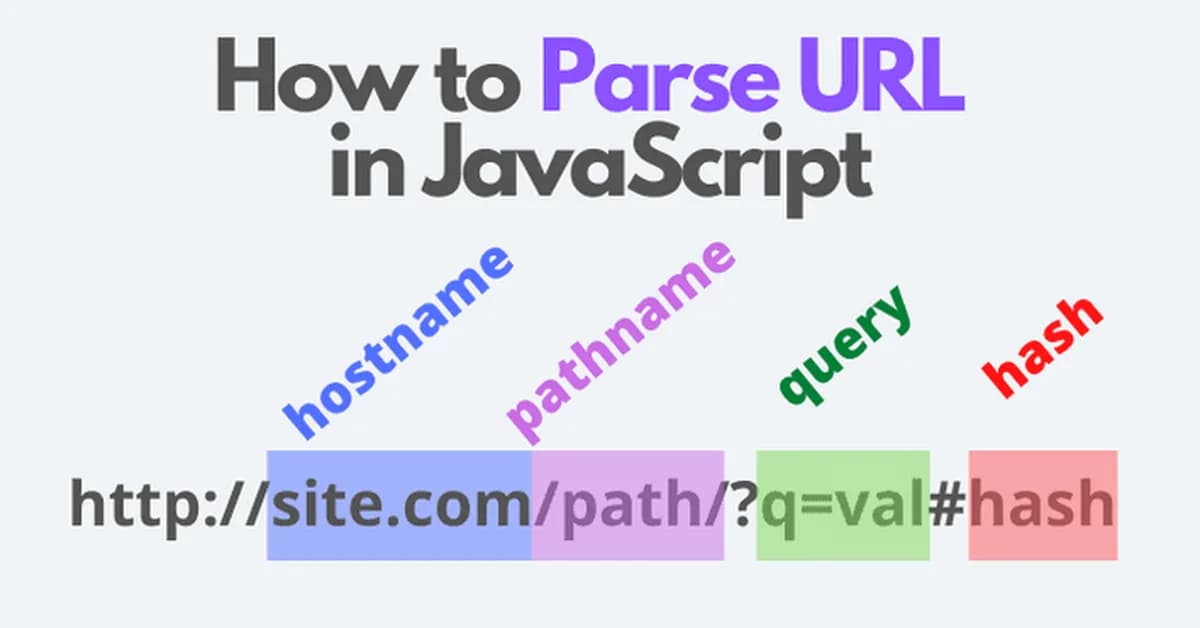
The URL API is indeed a powerful tool for working with URLs in JavaScript, offering a more robust and standardized approach compared to the older method of using DOM elements like <a> tags. Here’s an overview of how you can effectively use the URL and URLSearchParams APIs:
Parsing URLs
Basic Usage
javascript1const url = new URL('https://example.com/path?query=param'); 2console.log(url.protocol); // "https:" 3console.log(url.host); // "example.com" 4console.log(url.hostname); // "example.com" 5console.log(url.port); // "" 6console.log(url.pathname); // "/path" 7console.log(url.search); // "?query=param"
Extracting Query Parameters
javascript1const url = new URL('https://example.com/path?query=param'); 2const params = new URLSearchParams(url.search); 3console.log(params.get('query')); // "param" 4params.append('another', 'value'); // Adds another query parameter 5console.log(Array.from(params.entries())); // [["query", "param"], ["another", "value"]]
Building URLs
Constructing a New URL
javascript1const url = new URL('/path 2 3[Read the full article at DEV Community](https://dev.to/snappy_tools/how-to-parse-urls-in-javascript-the-url-api-vs-manual-parsing-1h0m) 4 5--- 6 7**Want to create content about this topic?** [Use Nemati AI tools](https://nemati.ai) to generate articles, social posts, and more.
6
Tags
Contents

Ali NematiWritten by Ali
![[AINews] The Unreasonable Effectiveness of Closing the Loop](/_next/image?url=https%3A%2F%2Fmedia.nemati.ai%2Fmedia%2Fblog%2Fimages%2Farticles%2F600e22851bc7453b.webp&w=3840&q=75)