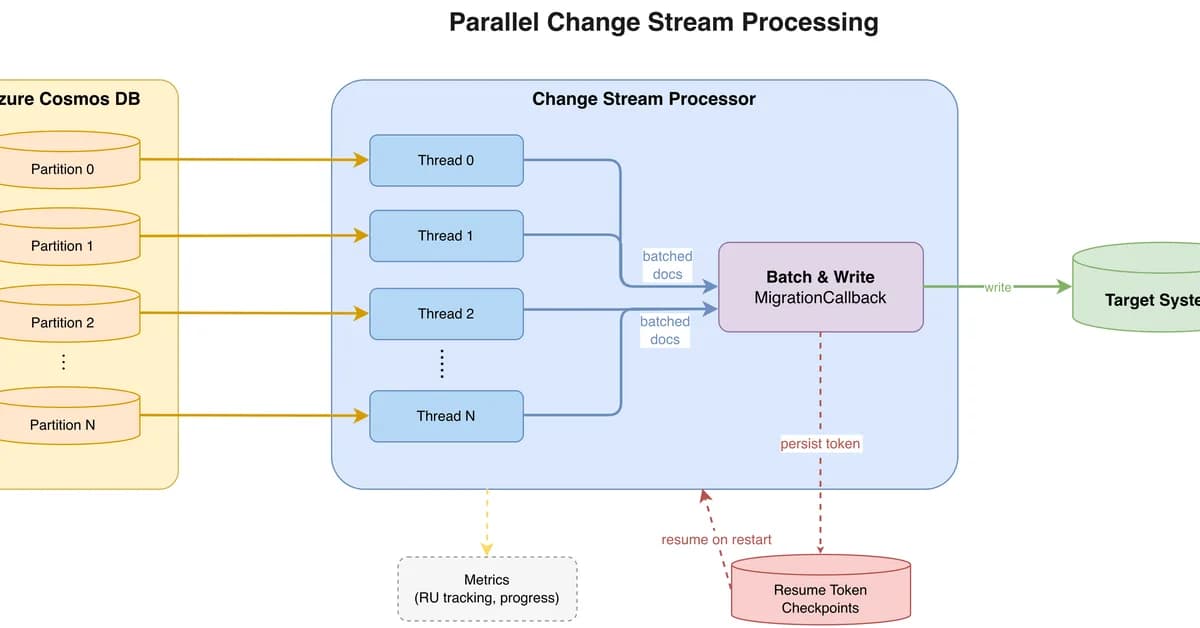
The given text describes a method for efficiently migrating data from MongoDB to another system using the change stream feature. Here are the key points and concepts covered:
-
Change Stream Basics:
- Change streams allow you to monitor all document changes in a collection or database.
- They provide real-time updates similar to event sourcing.
-
Threading Model:
- The migration process uses multiple threads, each handling one partition of the data.
- This parallel processing helps achieve higher throughput by leveraging multi-core CPUs and distributed systems.
-
Partitioning Strategy:
- Partitions are created based on a sharding key (e.g.,
user_id). - Each thread processes changes for a specific range of shard keys, ensuring that the workload is evenly distributed.
- Partitions are created based on a sharding key (e.g.,
-
Efficient Cursor Management:
- Instead of reading one document at a time from each partition, cursors are used to read batches of documents.
- This reduces overhead and improves performance by minimizing I/O operations.
-
Batch Processing:
- Changes are accumulated in memory until a batch size threshold is reached.
- Once the batch size is met, all changes are processed together (e.g., written to
Read the full article at DEV Community
Want to create content about this topic? Use Nemati AI tools to generate articles, social posts, and more.
2

Ali NematiWritten by Ali
![[AINews] The Unreasonable Effectiveness of Closing the Loop](/_next/image?url=https%3A%2F%2Fmedia.nemati.ai%2Fmedia%2Fblog%2Fimages%2Farticles%2F600e22851bc7453b.webp&w=3840&q=75)