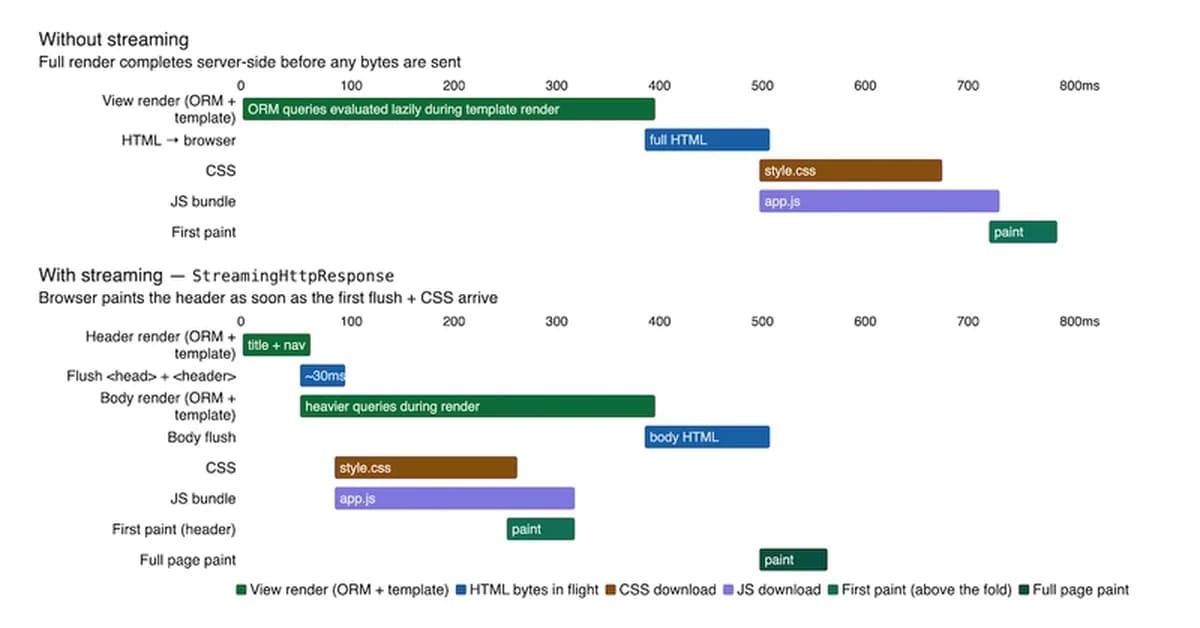
Using HTTP streaming in Django can indeed improve the perceived performance of your web application, especially on slower networks or when dealing with heavy pages that involve significant server-side processing. The technique you described involves splitting templates and sending parts of the HTML document as soon as they are ready, which allows browsers to start rendering content earlier and fetching static assets sooner.
Here's a summary of the key points from your article:
- HTTP Streaming in Django: By using
StreamingHttpResponse, you can send partial responses back to the client before the entire response is fully generated by the server. - Template Splitting: You split your templates into parts, with each part being sent as soon as it's ready. This allows critical content and assets (like CSS and JavaScript) to be loaded early.
- Performance Benefits:
- First Byte Time (TTFB): The server sends the first byte of the response sooner, reducing TTFB.
- Contentful Paint: Since static files are fetched earlier, Contentful Paint is improved.
- SEO Considerations: Faster TTFB can help with SEO as search engine bots may abandon requests if they don't receive a quick response.
- **Complexity and Trade
Read the full article at DEV Community
Want to create content about this topic? Use Nemati AI tools to generate articles, social posts, and more.
2

Ali NematiWritten by Ali
![[AINews] The Unreasonable Effectiveness of Closing the Loop](/_next/image?url=https%3A%2F%2Fmedia.nemati.ai%2Fmedia%2Fblog%2Fimages%2Farticles%2F600e22851bc7453b.webp&w=3840&q=75)