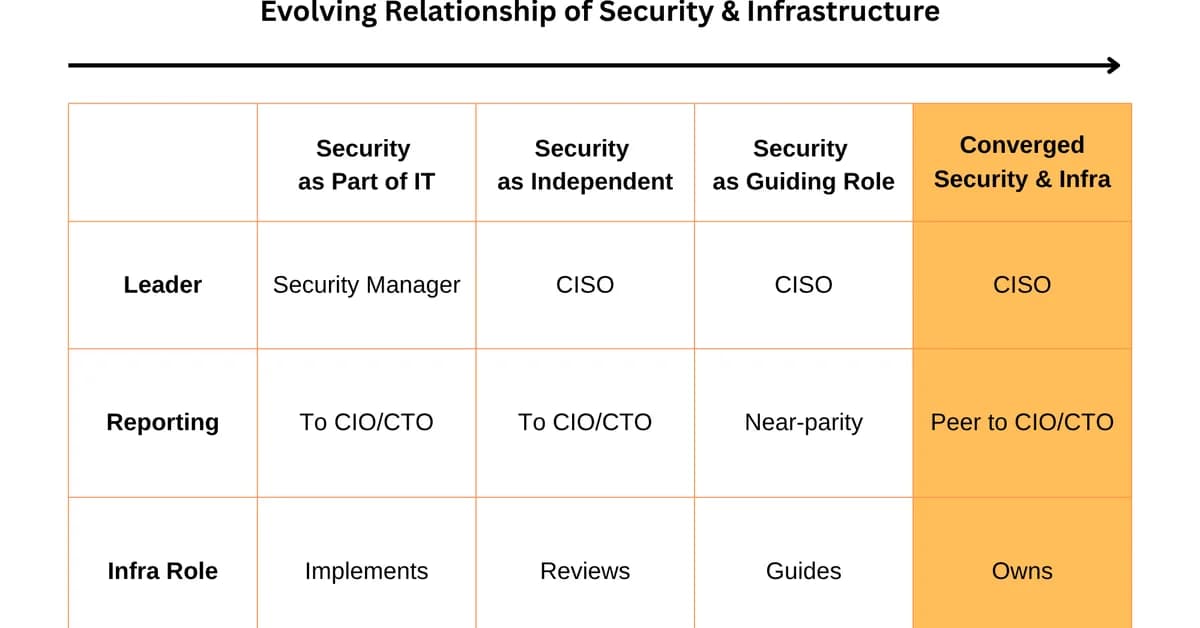
<p>The evolving relationship between security and infrastructure within organizations is reshaping how cybersecurity challenges are addressed. Traditionally, security teams have operated independently from IT, engineering, and infrastructure departments. However, as the complexity of modern environments grows, this siloed approach is becoming increasingly ineffective.</p>
<p>One significant trend is the convergence of security and infrastructure functions under a single leadership structure, often led by the CISO (Chief Information Security Officer). This shift is driven by several factors:</p>
<ul>
<li><strong>Integrated Decision-Making:** Every infrastructure decision has direct implications for security. How services connect, access control mechanisms, traffic flow management, and environment segmentation are all critical security concerns.</li>
<li><strong>Alignment of Incentives:** When the same team is responsible for both defining risk and implementing solutions, there's a better alignment between what needs to be done and who does it.</li>
<li><strong>Operational Efficiency:** Combining these functions can streamline operations and improve overall system reliability and performance.</li>
</ul>
<p>This trend also impacts how security products are developed and sold. Founders of cybersecurity startups must now consider the operational value their solutions provide beyond just risk reduction. Products that bridge gaps between security
Read the full article at Venture in Security
Want to create content about this topic? Use Nemati AI tools to generate articles, social posts, and more.
4

Ali NematiWritten by Ali
![[AINews] The Unreasonable Effectiveness of Closing the Loop](/_next/image?url=https%3A%2F%2Fmedia.nemati.ai%2Fmedia%2Fblog%2Fimages%2Farticles%2F600e22851bc7453b.webp&w=3840&q=75)