It looks like your text was cut off at the end. I'll summarize and expand on what you've covered so far, then provide an example of how to properly chain Promises in JavaScript.
Summary of Key Points
-
Promise Basics:
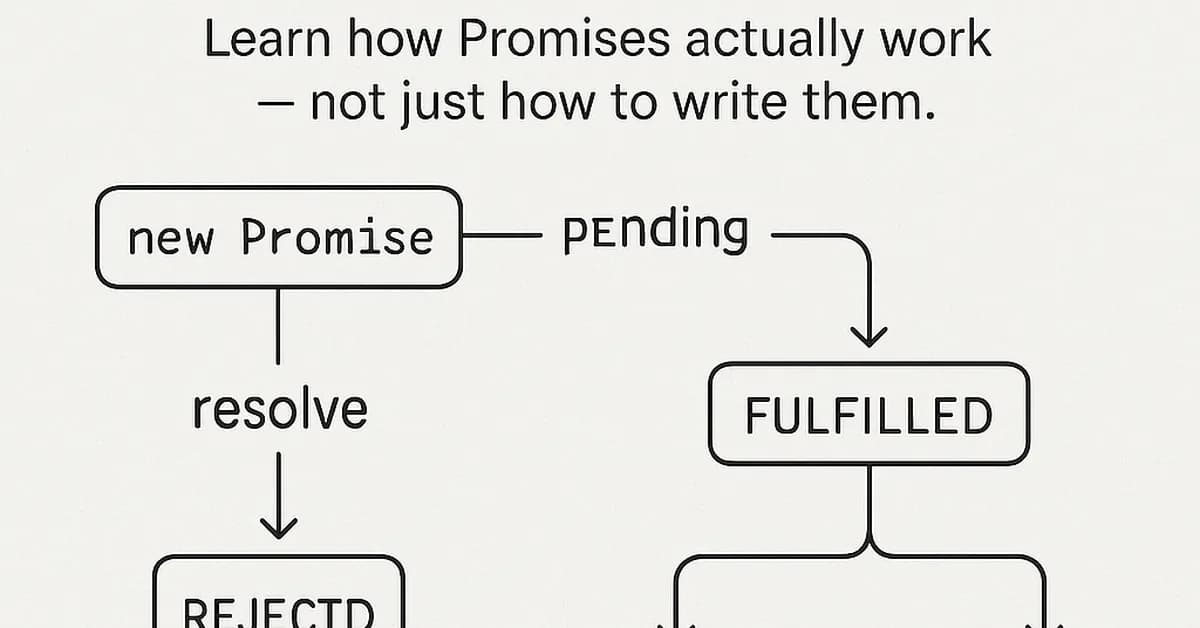
- A Promise represents a value that may not be available yet but will be resolved (or rejected) at some point in the future.
- It has three states:
pending,fulfilled, andrejected.
-
Creating Promises:
- You create a new Promise using the constructor, which takes a function with two parameters (
resolveandreject). Inside this function, you call eitherresolve(value)orreject(reason)to change the state of the promise.
- You create a new Promise using the constructor, which takes a function with two parameters (
-
Handling Promises:
- Use
.then()to handle fulfilled promises. - Use
.catch()to handle rejected promises. - Each
.then()returns a new Promise, allowing for chaining.
- Use
-
Chaining Promises:
- You can chain multiple
.then()calls together, where each subsequent.then()receives the result of the previous one as its input.
- You can chain multiple
Example: Chaining Promises
Let's build on
Read the full article at DEV Community
Want to create content about this topic? Use Nemati AI tools to generate articles, social posts, and more.
2
Contents

Ali NematiWritten by Ali
![[AINews] The Unreasonable Effectiveness of Closing the Loop](/_next/image?url=https%3A%2F%2Fmedia.nemati.ai%2Fmedia%2Fblog%2Fimages%2Farticles%2F600e22851bc7453b.webp&w=3840&q=75)