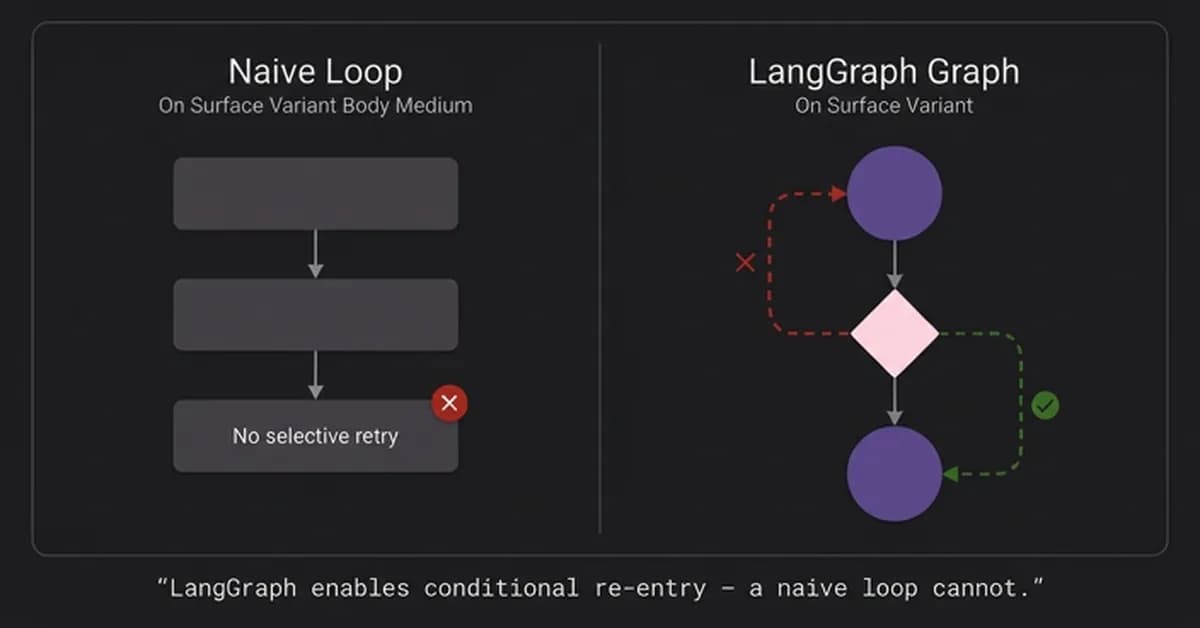
A detailed exploration of an experimental framework designed to study behavioral drift in Large Language Models (LLMs) through adversarial debate systems. The research leverages a multi-agent architecture built using LangGraph, a state machine for orchestrating complex agent interactions.
Key components include:
-
Memory Isolation Boundary: Ensures that each agent operates with limited access to information, preventing contamination of experimental data.
-
Adversarial Critic Agent: A strict evaluator designed to challenge the quality and consistency of arguments generated by other agents. Calibration of this critic is a critical parameter affecting experiment outcomes.
-
Pydantic Schema Enforcement: Ensures that all agent outputs conform to predefined structures, facilitating deterministic routing within the state machine.
-
Retry Logic with Exponential Backoff: Implemented using Tenacity decorators to handle API timeouts and errors gracefully during long-running debates.
The architecture also supports model-agnostic design through abstraction layers like LangChain’s init_chat_model, allowing easy switching between different LLM providers without altering core logic.
Challenges encountered include managing state object bloat, calibrating the critic's strictness, and ensuring robust data recovery mechanisms to prevent loss of experimental runs due to errors.
The research aims to measure behavioral drift in AI models under
Read the full article at Towards AI - Medium
Want to create content about this topic? Use Nemati AI tools to generate articles, social posts, and more.