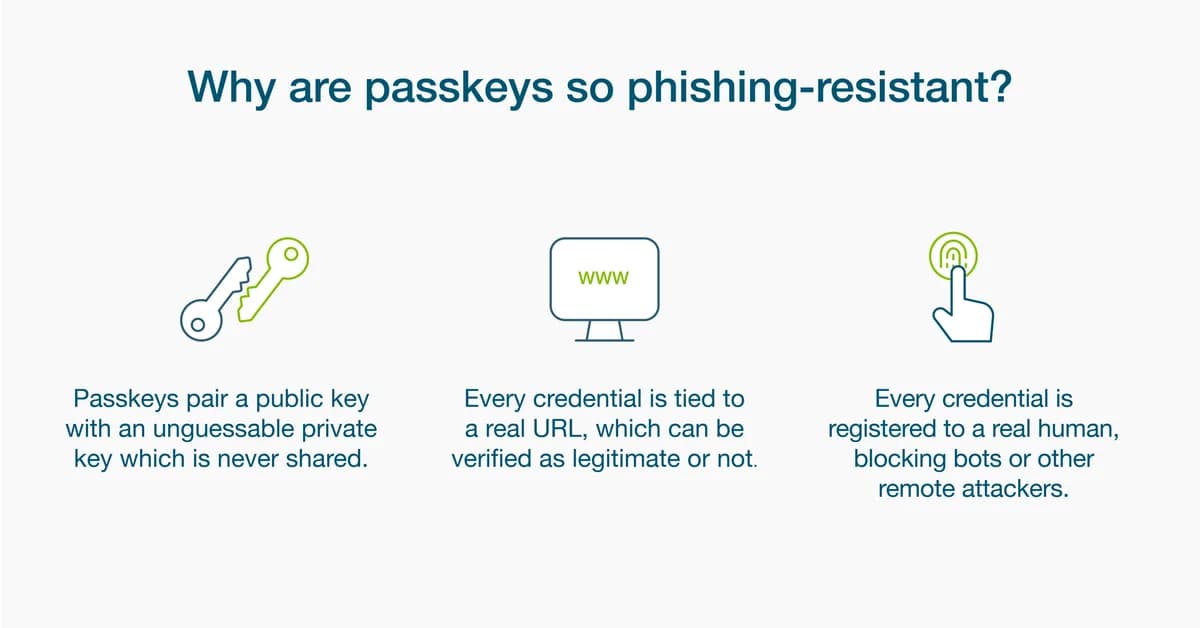
It looks like you're implementing a WebAuthn-based authentication system using Fastify, and you've provided the beginnings of an API for registering new credentials and verifying existing ones. Here's how you can complete your implementation:
1. Registering New Credentials
You already have a route to register new credentials:
javascript1fastify.post('/register/verify', async (request, reply) => { 2 try { 3 const { username, credential } = request.body; 4 5 // Check if the user exists and get their current challenge 6 const user = userStore.get(username); 7 if (!user) { 8 return reply.code(404).send({ error: 'User not found' }); 9 } 10 11 // Verify the registration response 12 const verification = await verifyRegistrationResponse({ 13 credential, 14 expectedChallenge: user.challenge, 15 expectedOrigin: webAuthnConfig.origin, 16 expectedRPID: webAuthnConfig.rpId, 17 authenticator: { 18 credentialID: null, // This is a new credential, so no ID yet 19 credentialPublicKey: null, // No public key for a new credential 20 counter: null, // Counter not set for a new credential 21 22[Read the full article at DEV Community](https://dev.to/johalputt/lessons-phishing-vs-passkeys-a-head-to-head-3k28) 23 24--- 25 26**Want to create content about this topic?** [Use Nemati AI tools](https://nemati.ai) to generate articles, social posts, and more.
2
Contents

Ali NematiWritten by Ali
![[AINews] The Unreasonable Effectiveness of Closing the Loop](/_next/image?url=https%3A%2F%2Fmedia.nemati.ai%2Fmedia%2Fblog%2Fimages%2Farticles%2F600e22851bc7453b.webp&w=3840&q=75)