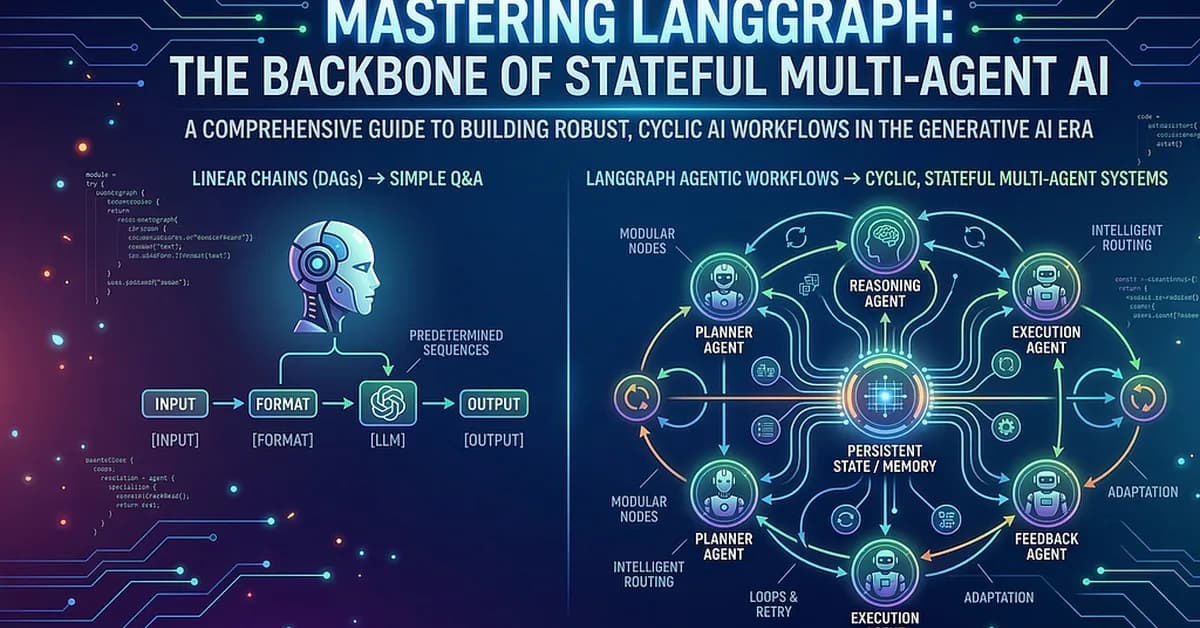
It looks like you've provided an extensive overview and code snippets for using the langgraph library to create complex workflows involving large language models, conditional logic, persistence, human-in-the-loop operations, and tool integration. Below is a summary of key points along with some additional explanations and examples:
Key Concepts
- State Definition: Define the state structure that your workflow will use.
- Nodes and Edges: Nodes represent individual steps in the workflow, while edges define how data flows between these nodes.
- Conditional Logic: Use conditional logic to route execution based on specific criteria.
- Persistence (Checkpoints): Automatically save states after each node execution for long-running jobs or human-in-the-loop scenarios.
- Tool Integration: Integrate external tools that can be called by the LLM within your workflow.
Example Workflow
Let's break down a simplified example based on the provided code snippets to illustrate how these concepts work together:
Step 1: Define State Structure
python1from typing import TypedDict, Literal 2 3class OrderState(TypedDict): 4 order_id: str 5 customer_request: str 6 analysis_result: str 7 processing_path: Literal["standard", " 8 9[Read the full article at Towards AI - Medium](https://pub.towardsai.net/mastering-langgraph-the-backbone-of-stateful-multi-agent-ai-0424500a510b?source=rss----98111c9905da---4) 10 11--- 12 13**Want to create content about this topic?** [Use Nemati AI tools](https://nemati.ai) to generate articles, social posts, and more.
2
Tags
Contents

Ali NematiWritten by Ali
![[AINews] The Unreasonable Effectiveness of Closing the Loop](/_next/image?url=https%3A%2F%2Fmedia.nemati.ai%2Fmedia%2Fblog%2Fimages%2Farticles%2F600e22851bc7453b.webp&w=3840&q=75)