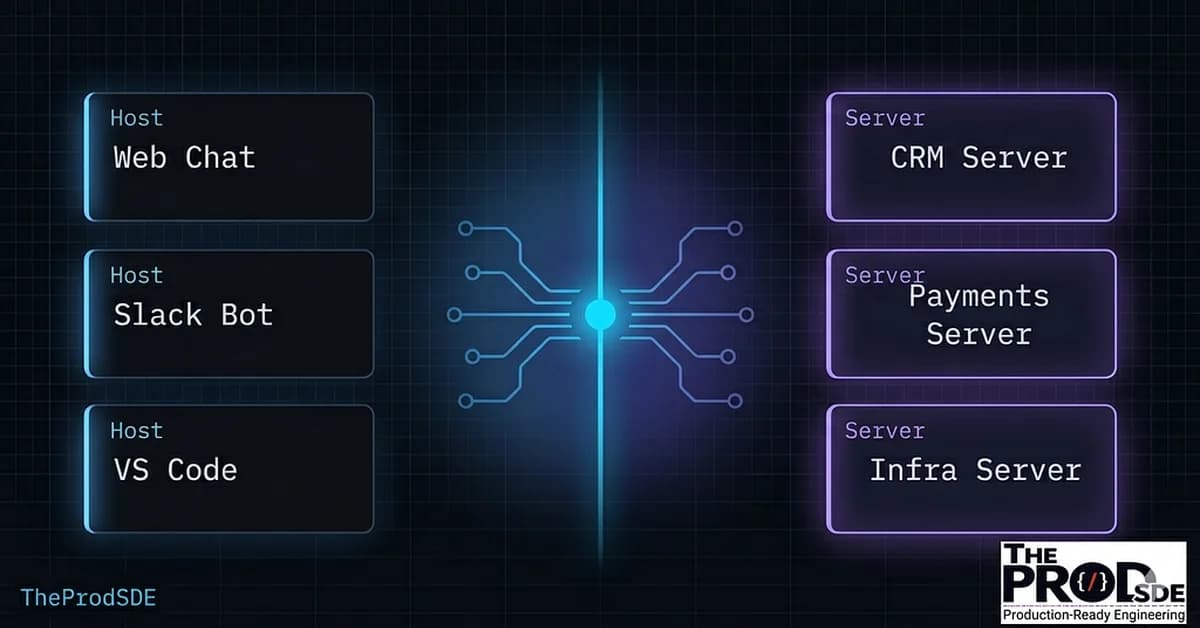
It looks like you're diving into Model Context Protocol (MCP) for building a robust system that integrates AI tools and services. MCP allows your AI agents to discover, invoke, and manage external tools dynamically without hardcoding them in the client application. This is particularly useful when you have multiple clients connecting to different servers with varying sets of tools.
Here's an overview of what we've covered:
- MCP Introduction: Understanding why and how to use MCP, especially for scenarios where you need dynamic discovery of services and tools.
- Server-Side Implementation:
- You created a Python server using
fastmcpthat exposes several functionalities such as customer lookup, order retrieval, ticket creation, internal guidance documents (resources), and email templates (prompts).
- You created a Python server using
- Client-Side Integration:
- The client dynamically discovers available tools from the MCP server.
- It interacts with an AI model like GPT-4 through OpenAI's API to generate responses that may include calls to these discovered tools.
- Authentication:
- For public-facing or remote servers, you've implemented OAuth 2.1 Authorization Code + PKCE for secure token-based authentication.
Key Points
Dynamic Discovery
Read the full article at Towards AI - Medium
Want to create content about this topic? Use Nemati AI tools to generate articles, social posts, and more.
2
Contents

Ali NematiWritten by Ali
![[AINews] The Unreasonable Effectiveness of Closing the Loop](/_next/image?url=https%3A%2F%2Fmedia.nemati.ai%2Fmedia%2Fblog%2Fimages%2Farticles%2F600e22851bc7453b.webp&w=3840&q=75)