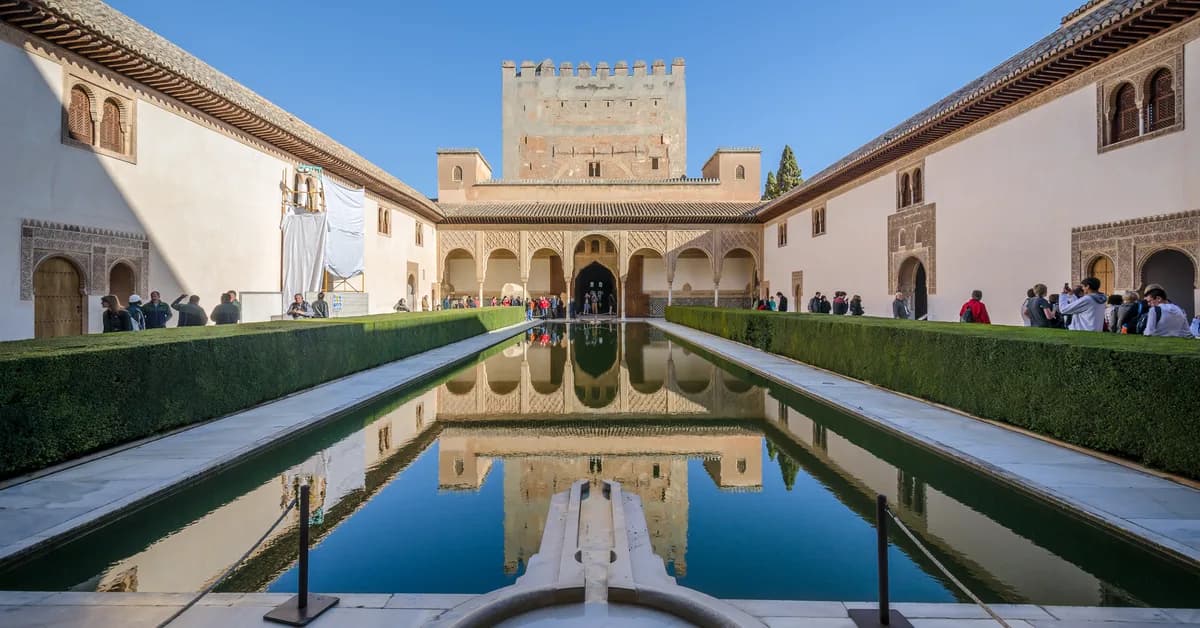
The article discusses the impermanent nature of history and how it is often lost over time, leaving only fragments behind. It specifically mentions a historical mystery related to the Alhambra in Granada, Spain - an ancient palace complex renowned for its intricate water systems and architectural beauty.
One particular myth that has circulated about the Alhambra involves a fountain located in the Court of the Lions. According to this myth, the fountain was time-activated, with water flowing at specific intervals controlled by some kind of clock mechanism. This idea is based on the presence of 12 lion statues surrounding the fountain and the fact that there are twelve hours in each half of the day.
However, the article argues against this interpretation. It points out that archaeological evidence from recent restorations suggests the marble block with holes through which water flowed into a basin was designed to diffuse the flow rather than control it at specific times. Additionally, inscriptions around the fountain refer to flowing and still waters in a way that seems more consistent with a reflective pool theme rather than a time mechanism.
The author emphasizes how easily historical facts can be misinterpreted or lost over centuries, leaving us with incomplete or inaccurate understandings of past wonders like the Alhambra's water systems
Read the full article at Hackaday
Want to create content about this topic? Use Nemati AI tools to generate articles, social posts, and more.

![[AINews] The Unreasonable Effectiveness of Closing the Loop](/_next/image?url=https%3A%2F%2Fmedia.nemati.ai%2Fmedia%2Fblog%2Fimages%2Farticles%2F600e22851bc7453b.webp&w=3840&q=75)