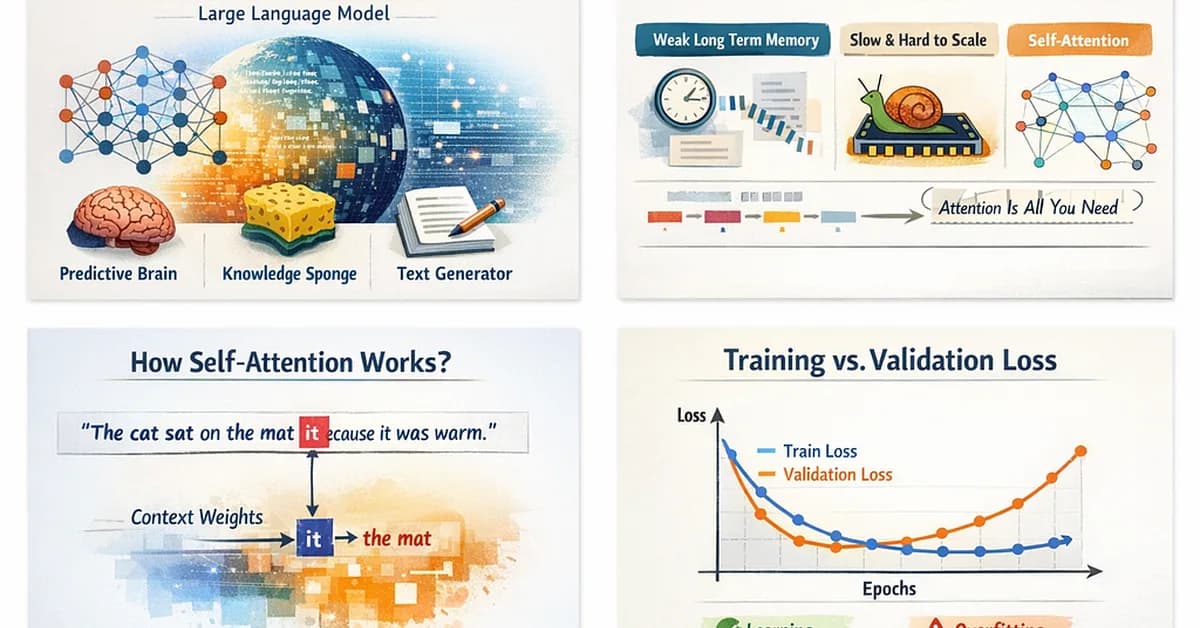
Memory Sparse Attention (MSA) has been developed to enable large language models to handle up to 100 million tokens efficiently, addressing limitations of existing approaches that suffer from precision degradation and latency issues as context length increases. This breakthrough is crucial for developers working on complex applications requiring extensive historical data processing, such as summarization tools or digital twin systems, by offering a scalable solution without compromising performance.
Read the full article at arXiv cs.CL (NLP)
Want to create content about this topic? Use Nemati AI tools to generate articles, social posts, and more.
Views93

alinemati1983-6987BlogUI.author_articles