The article "Next-Word Prediction: How Conditional Probability Turned Language into a Learning Task" discusses how the task of predicting the next word in a sequence has become a foundational approach in training language models. Here's a summary of key points from the article:
-
Objective and Formalization:
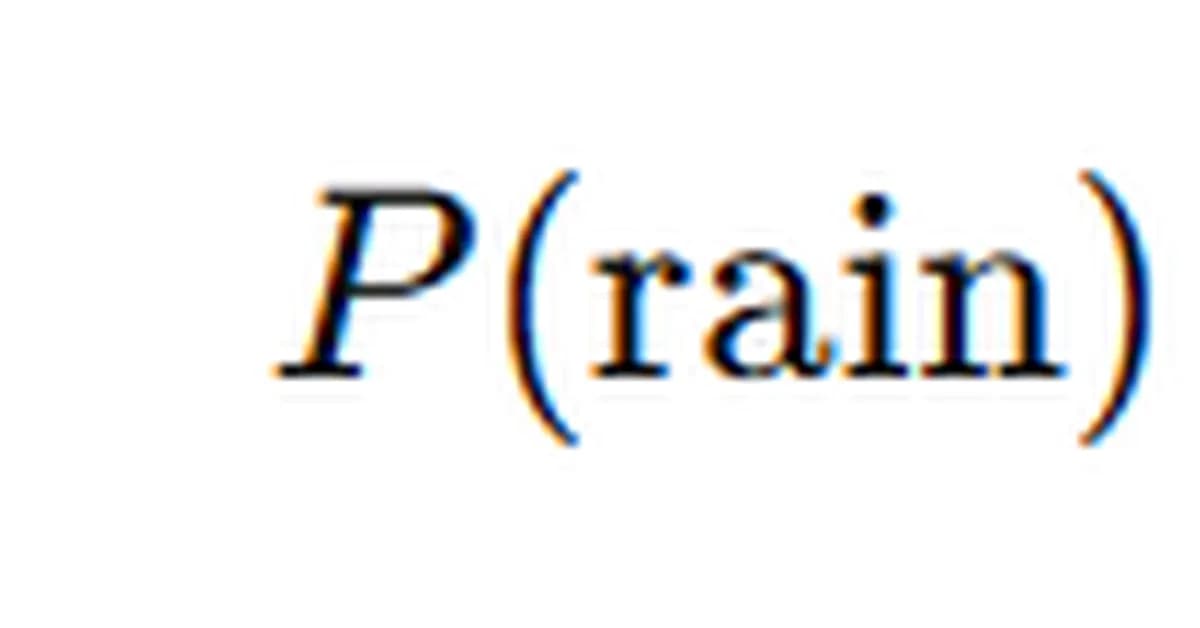
- The core objective is to predict the next word given all previous words.
- Formally, this can be written as ( P(w_t | w_{t-1}, w_{t-2}, \ldots) ), where ( w_t ) is the current word and ( w_{t-1} ) through ( w_0 ) are all previous words in the sequence.
-
Historical Context:
- Early approaches focused on predicting the next character, which was simpler but limited.
- The shift to predicting the next word opened up possibilities for more complex language understanding and generation tasks.
-
Conditional Probability:
- Next-word prediction is framed as a problem of conditional probability: estimating ( P(w_t | w_{t-1}, \ldots) ).
- This formulation allows models to learn from sequences of words rather than individual characters, making the task
Read the full article at Towards AI - Medium
Want to create content about this topic? Use Nemati AI tools to generate articles, social posts, and more.
2

Ali NematiWritten by Ali
![[AINews] The Unreasonable Effectiveness of Closing the Loop](/_next/image?url=https%3A%2F%2Fmedia.nemati.ai%2Fmedia%2Fblog%2Fimages%2Farticles%2F600e22851bc7453b.webp&w=3840&q=75)