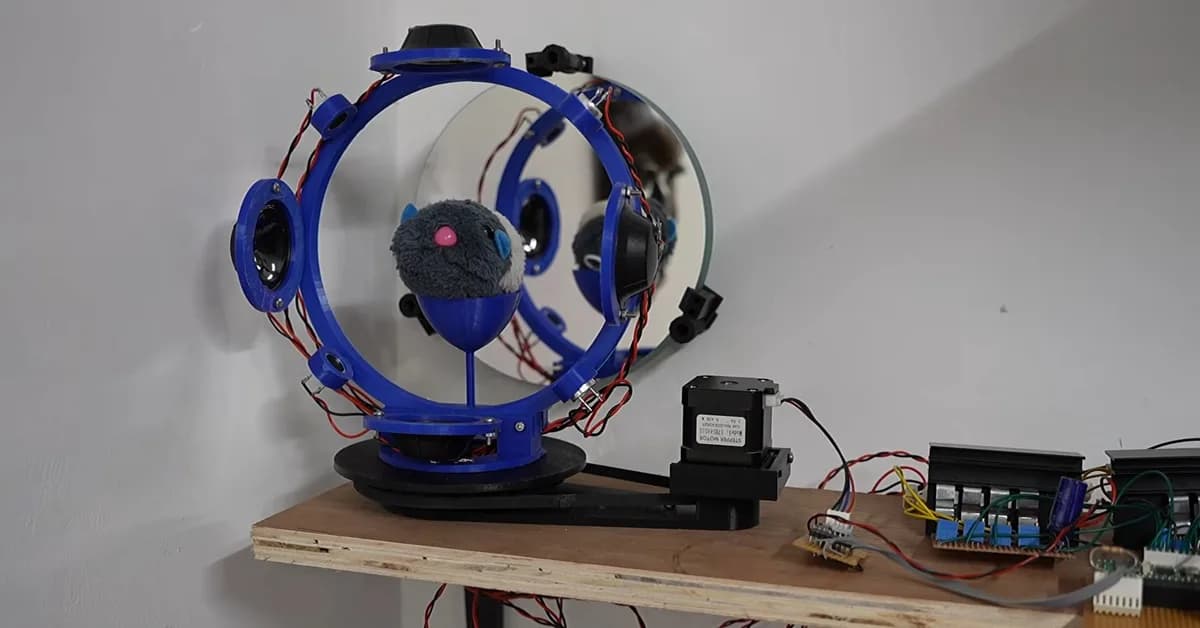
A new acoustic tomographic array uses a Raspberry Pi Pico to drive ultrasonic transducers, enabling the visualization of sound waves through Schlieren imaging. This hardware-driven approach allows engineers to see how audio signals interact with furniture and space without performing thousands of manual microphone measurements. The system scales frequencies to make complex wave behaviors visible, offering a low-cost method for testing spatial audio and beam steering technologies.
Read the full article at Hackaday
Want to create content about this topic? Use Nemati AI tools to generate articles, social posts, and more.
3

Ali NematiWritten by Ali