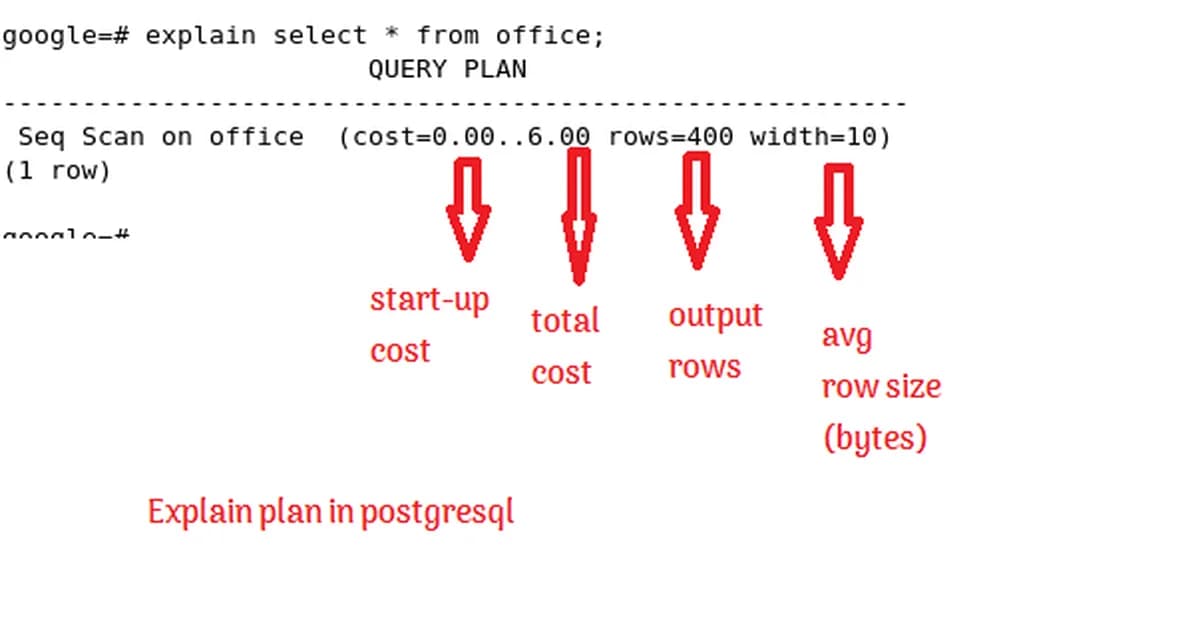
The article you've shared provides a comprehensive guide on how to use EXPLAIN ANALYZE in PostgreSQL for diagnosing and optimizing slow SQL queries. Here are the key points summarized:
Key Concepts
-
Understanding Query Execution Plans:
- The
EXPLAINcommand shows the execution plan of a query. ANALYZEoption runs the actual query to gather real-time statistics.
- The
-
Common Issues Identified by EXPLAIN ANALYZE:
- Sequential Scans on Large Tables: Indicates that PostgreSQL is scanning entire tables rather than using indexes efficiently.
- Nested Loops with Many Rows: Suggests inefficient joins, often due to lack of proper indexing or join conditions.
- Estimate vs. Actual Row Counts: Significant discrepancies between estimated and actual row counts can indicate outdated statistics.
-
Buffers Option:
- The
BUFFERSoption inEXPLAIN ANALYZEprovides insights into how many times data was read from disk versus served from memory (shared_buffers). High disk reads suggest inefficiencies or insufficient RAM.
- The
Practical Workflow
- Step 1: Get the Plan with Buffers
sql
1EX
Read the full article at DEV Community
Want to create content about this topic? Use Nemati AI tools to generate articles, social posts, and more.
9
Tags
Contents

Ali NematiWritten by Ali
![[AINews] The Unreasonable Effectiveness of Closing the Loop](/_next/image?url=https%3A%2F%2Fmedia.nemati.ai%2Fmedia%2Fblog%2Fimages%2Farticles%2F600e22851bc7453b.webp&w=3840&q=75)