What is CCS?
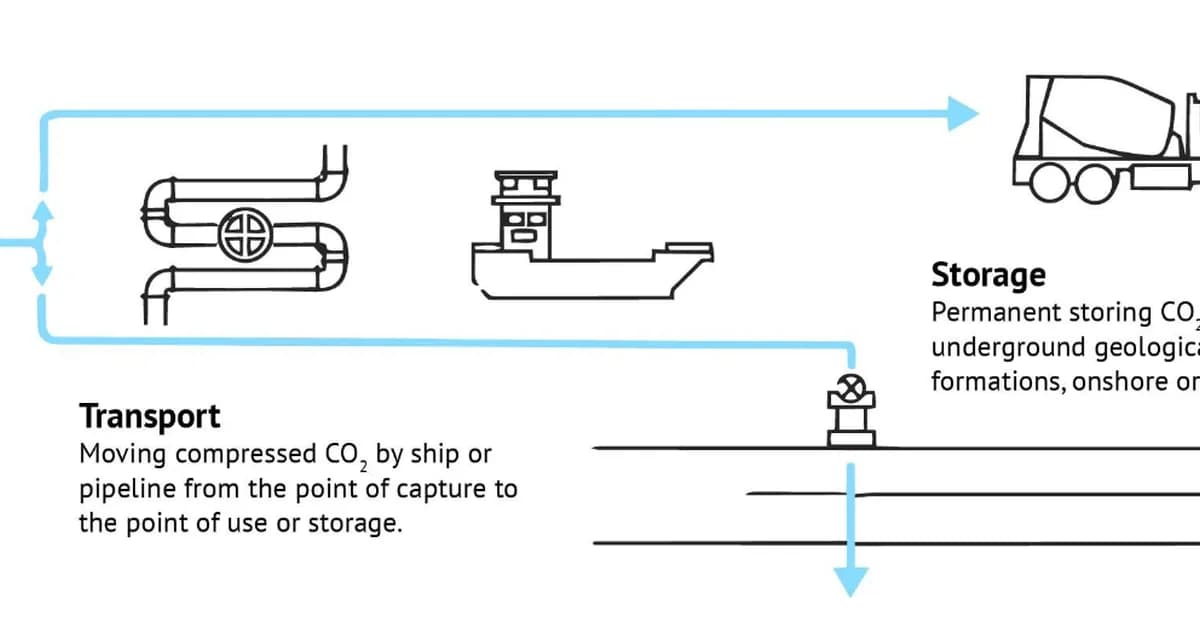
Carbon Capture and Storage (CCS) involves capturing carbon dioxide (CO2) emissions from large sources such as power plants, cement factories, and other industrial facilities. The process typically includes the following steps:
- Capture: CO2 is separated from a facility's exhaust stream using chemical solvents.
- Compression: Captured CO2 is compressed into a liquid form for transportation.
- Transportation: Liquid CO2 is transported via pipelines or vehicles to storage sites.
- Storage: The CO2 is injected into underground reservoirs, such as depleted oil fields or saline aquifers.
The term "CCUS" (Carbon Capture, Utilization and Storage) sometimes refers to the use of captured CO2 for various applications like making fertilizers, fuels, or building materials. However, these uses do not necessarily result in permanent emissions reductions since the CO2 can be released back into the atmosphere later.
History and Current Applications
- Early Use: CCS was first used in oil wells in the 1970s for enhanced oil recovery (EOR), which involves injecting captured CO2 into depleted oil fields to extract more oil.
- Current Usage: Most of the CO2
Read the full article at Carbon Brief
Want to create content about this topic? Use Nemati AI tools to generate articles, social posts, and more.
Views206
On this page

Ali NematiBlogUI.author_articles