The key takeaway from this analysis is that understanding and correctly identifying the purpose of each register in a control system is crucial for successful exploitation. Here are the main points to highlight:
-
Register Identification:
- The first step in exploiting Modbus-based systems is accurately mapping registers to their corresponding functions within the process.
- Without proper documentation or access to internal systems, this requires extensive testing and observation.
-
Output vs Setpoint Registers:
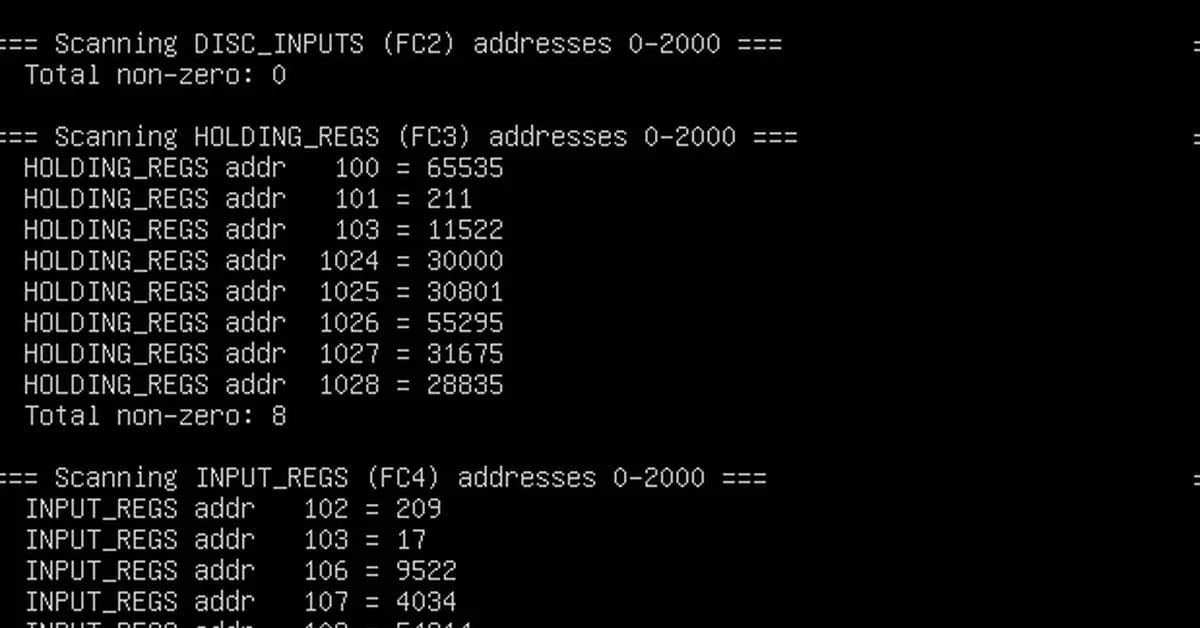
- Some registers are outputs that the PLC recalculates every cycle (e.g., HR 100-103). Writing to these has no lasting effect because they are immediately overwritten.
- Other registers hold setpoints or configuration values that can be changed and persist until altered again.
-
Impact of Changes:
- Modifying a setpoint register can cause the control system to adjust process variables, potentially leading to dangerous conditions if done maliciously.
- The Oldsmar attack class demonstrates how changing setpoints can indirectly manipulate critical parameters like reactor pressure or product flow rates.
-
Documentation and Access:
- Having access to PLC source code (e.g., OpenPLC Editor) greatly simplifies the process by providing clear variable
Read the full article at InfoSec Write-ups - Medium
Want to create content about this topic? Use Nemati AI tools to generate articles, social posts, and more.
4

alinemati1983-6987Written by alinemati1983-6987