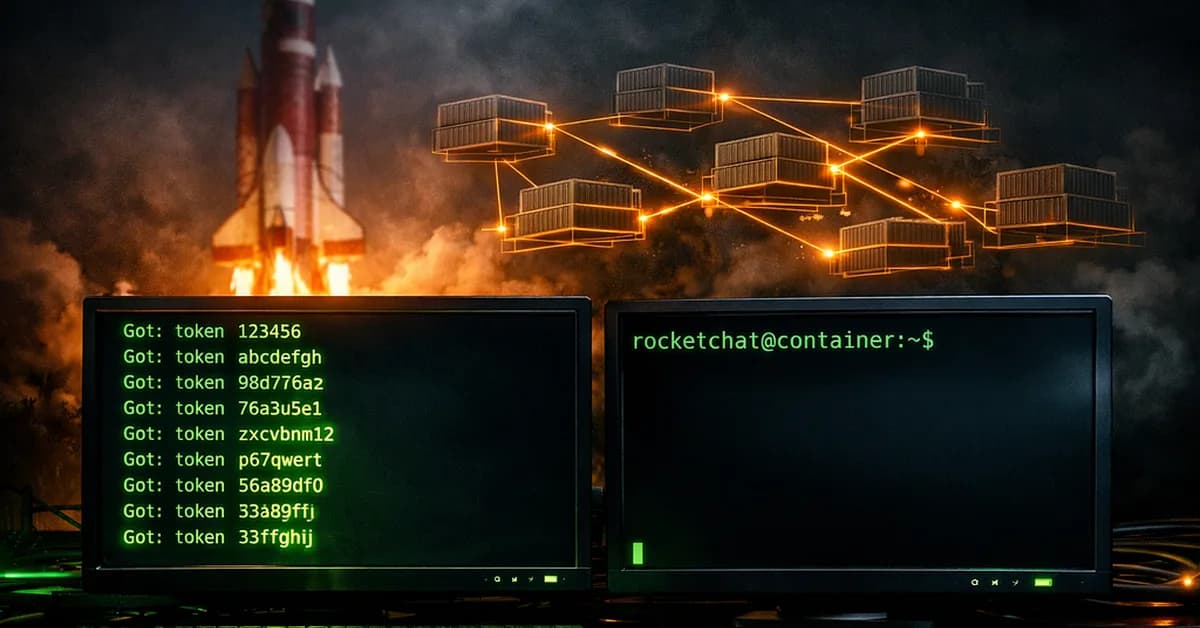
It sounds like you've provided an in-depth walkthrough of a penetration testing scenario, focusing on exploiting vulnerabilities within a Dockerized Rocket.Chat environment to gain administrative access and move laterally to other services running internally. Let's break down the key points and steps involved:
1. Initial Exploitation
Blind NoSQL Injection:
- The initial phase involves extracting reset tokens for both low-privilege (
[email protected]) and admin accounts via a blind NoSQL injection attack. - This is achieved by sending crafted requests to the password reset endpoint, which allows incremental matching of characters in the stored token.
Webhook Creation & Shell Execution:
- Once the admin account's password is changed, an integration webhook is created within Rocket.Chat.
- A reverse shell payload is triggered via this webhook, establishing a connection back to the attacker’s machine (listening on port 4444).
2. Post-Exploitation
Container Environment Inspection:
- Upon gaining access inside the Docker container, environment variables reveal internal network details:
- MongoDB instance at
172.17.0.2:27017 - Mongo Express interface at `172.
- MongoDB instance at
Read the full article at InfoSec Write-ups - Medium
Want to create content about this topic? Use Nemati AI tools to generate articles, social posts, and more.
4
Tags
Contents

Ali NematiWritten by Ali
![[AINews] The Unreasonable Effectiveness of Closing the Loop](/_next/image?url=https%3A%2F%2Fmedia.nemati.ai%2Fmedia%2Fblog%2Fimages%2Farticles%2F600e22851bc7453b.webp&w=3840&q=75)