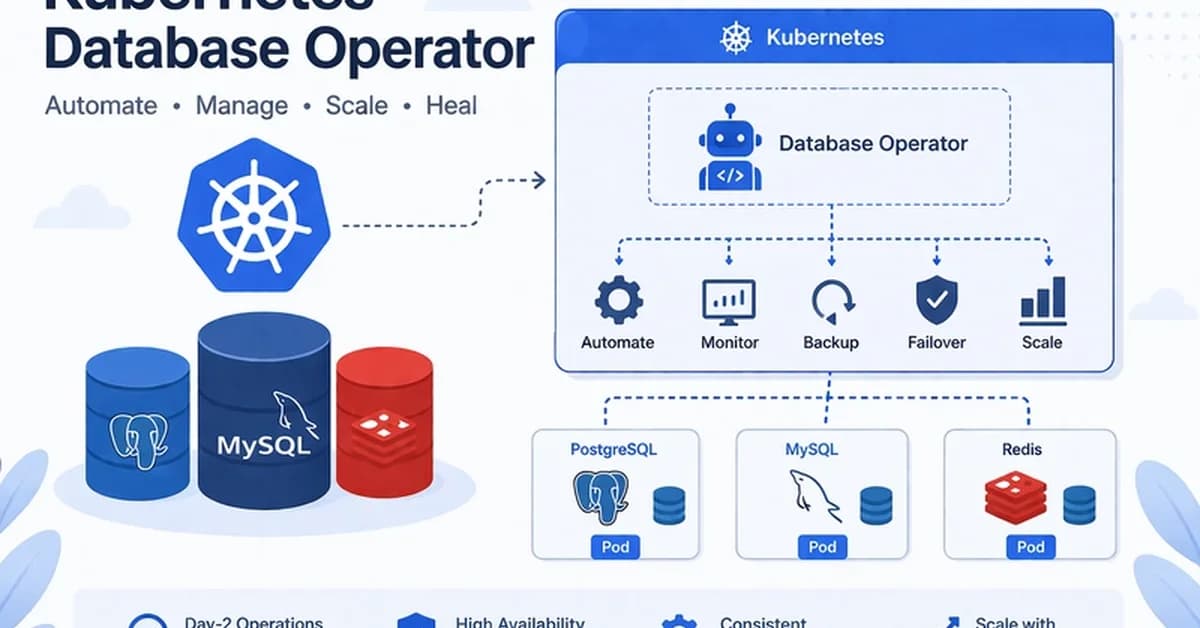
Running a database like MySQL in Kubernetes requires careful consideration of several aspects to ensure high availability, data consistency, and operational efficiency. Below is an overview of key considerations and best practices for setting up a MySQL cluster on Kubernetes:
1. Database Design Considerations
- High Availability (HA): Ensure your setup supports automatic failover and redundancy.
- Data Consistency: Choose between strong consistency or eventual consistency based on application requirements.
- Scalability: Plan for horizontal scaling to handle increased load.
2. Kubernetes Resources Overview
StatefulSet
- Manages the MySQL instances, ensuring persistent storage and ordered deployment.
- Example:
yaml 1apiVersion: apps/v1
2kind: StatefulSet
3metadata:
4  name: mysql
5spec:
6  serviceName: "mysql"
7  replicas: 3
8  selector:
9    matchLabels:
10      app: mysql
11  template:
12    metadata:
13      labels:
14        app: mysql
15    spec:
16      containers:
17      - name: mysql
18        image: mysql:8.0
19        ports:
20        - containerPort: 3306
21        volumeMounts:
22        - mountPath: /var/lib
Read the full article at DEV Community
Want to create content about this topic? Use Nemati AI tools to generate articles, social posts, and more.
5
Contents

Ali NematiWritten by Ali
![[AINews] The Unreasonable Effectiveness of Closing the Loop](/_next/image?url=https%3A%2F%2Fmedia.nemati.ai%2Fmedia%2Fblog%2Fimages%2Farticles%2F600e22851bc7453b.webp&w=3840&q=75)