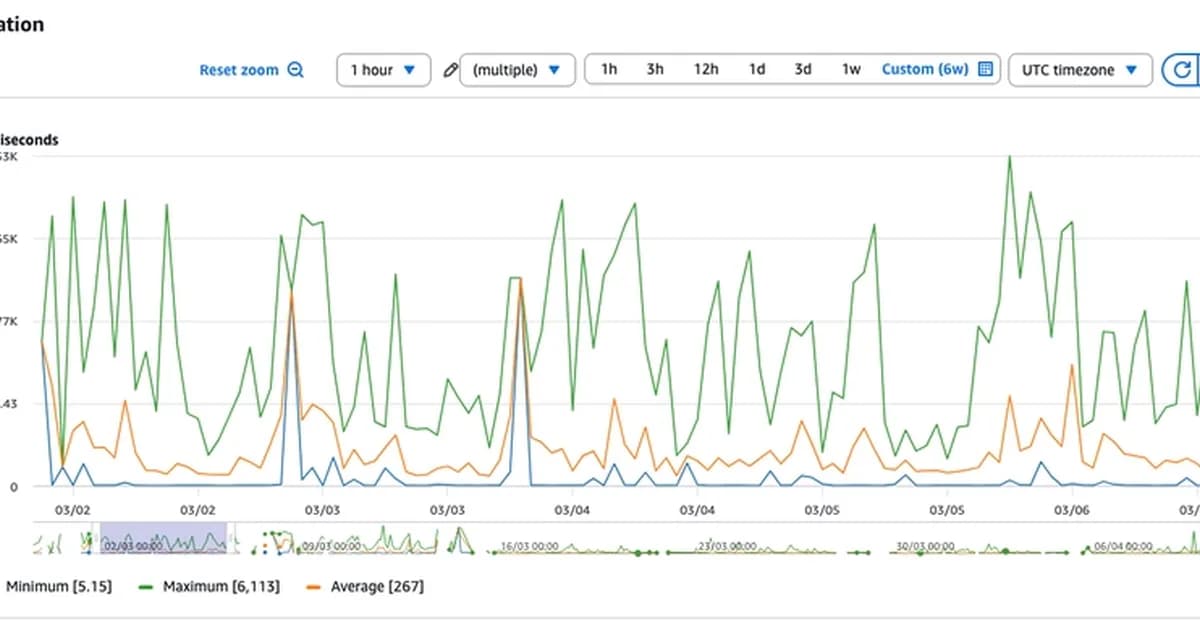
Based on your detailed explanation, it seems you're trying to optimize database connections in a serverless environment using AWS Lambda and Amazon RDS. You've implemented several strategies including:
- RDS Token Authentication: This allows for secure and temporary access to the database without needing to store long-term credentials.
- Connection Pooling with Psycopg3: To reuse database connections within the same runtime, reducing overhead from repeated connection establishment.
However, you're encountering issues where some Lambda functions fail due to timeouts while others succeed. Here are a few suggestions to address these challenges:
1. Increase Timeout and Memory Allocation
Lambda function timeout is currently set at 5 seconds which might not be sufficient for establishing database connections or executing complex queries. Consider increasing the timeout value (up to 900 seconds) and memory allocation (up to 3008 MB). This can help in reducing cold start times and improving connection establishment time.
2. Optimize Connection Pool Configuration
Ensure that your connection pool configuration is optimized for Lambda's execution environment:
- Min Size: Set the minimum number of connections in the pool.
- Max Size: Define the maximum number of connections to prevent resource exhaustion.
- **
Read the full article at DEV Community
Want to create content about this topic? Use Nemati AI tools to generate articles, social posts, and more.

![[AINews] The Unreasonable Effectiveness of Closing the Loop](/_next/image?url=https%3A%2F%2Fmedia.nemati.ai%2Fmedia%2Fblog%2Fimages%2Farticles%2F600e22851bc7453b.webp&w=3840&q=75)