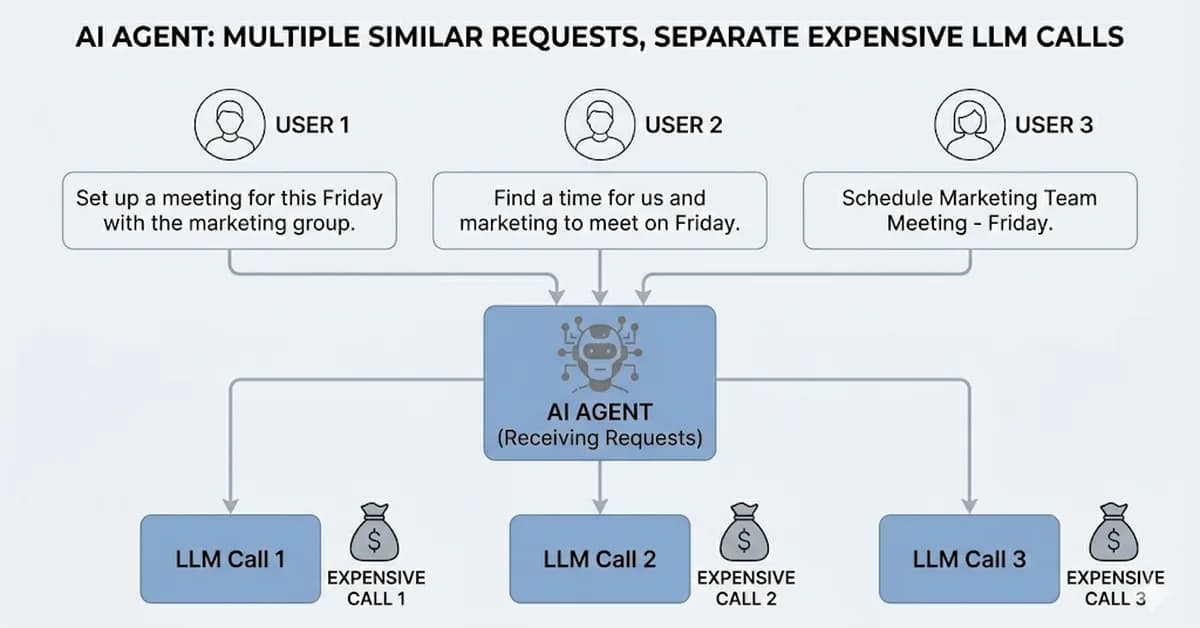
It sounds like you're working on implementing a semantic caching mechanism using Redis and LangGraph to optimize the response times for common queries while reducing the cost of calling an LLM (Language Model Like GPT-4) for each request. This is a great approach, especially in scenarios where there are frequent repetitive questions that can be answered from a cache rather than hitting the expensive LLM.
Key Points and Considerations
-
Similarity Threshold Tuning:
- The similarity threshold is crucial as it balances between precision (correctness of cached responses) and recall (number of queries correctly served by the cache).
- You need to carefully evaluate different thresholds using a representative dataset to find an optimal balance.
-
F1 Score for Evaluation:
- F1 score combines both precision and recall into a single metric, which is useful for evaluating the overall effectiveness of your caching strategy.
- A high F1 score indicates that you are serving correct responses efficiently without missing many opportunities to serve from cache.
-
Latency Improvement:
- The benchmark results show significant latency improvement when the cache is warm (91% reduction in response time).
- This translates into a better user experience as queries are answered
Read the full article at Towards AI - Medium
Want to create content about this topic? Use Nemati AI tools to generate articles, social posts, and more.
2
Tags
Contents

Ali NematiWritten by Ali
![[AINews] The Unreasonable Effectiveness of Closing the Loop](/_next/image?url=https%3A%2F%2Fmedia.nemati.ai%2Fmedia%2Fblog%2Fimages%2Farticles%2F600e22851bc7453b.webp&w=3840&q=75)