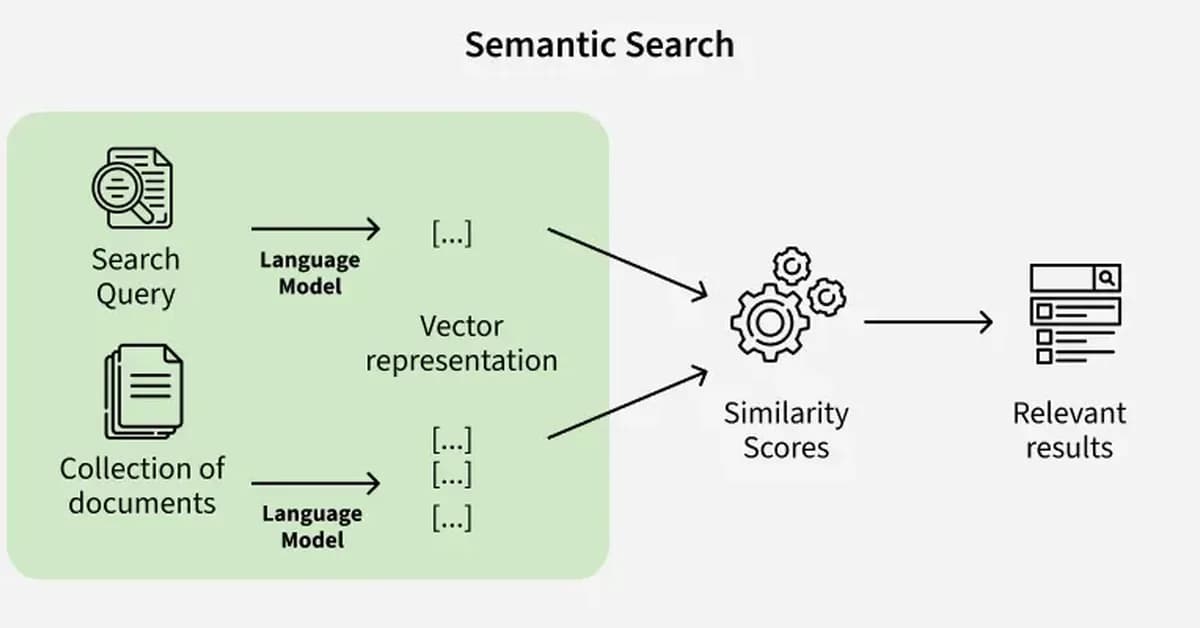
The provided text discusses several key lessons learned from implementing a vector-based search system using embeddings, focusing on areas such as data consistency, failure handling, and relevance ranking. Here are the main takeaways:
-
Explicit Lifecycle State Management:
- Documents should move through explicit lifecycle states (e.g., PENDING, READY, FAILED) rather than relying on implicit transitions tied to method execution.
- This ensures that partially processed data does not leak into retrieval processes and produces inconsistent results or runtime failures.
-
Model Intermediate States Explicitly:
- By modeling intermediate states explicitly, the system can tolerate failure without losing visibility.
- Recording errors alongside documents allows for easier debugging and understanding of why a process failed.
-
Separate Retrieval from Ranking:
- While retrieval (converting queries into vectors and returning similar documents) is relatively straightforward, ranking results based on relevance is where systems often fail.
- The system should explicitly handle the transformation of raw similarity scores into meaningful relevance rankings to ensure useful search results for users.
-
Explicit Scoring Model:
- Transforming raw cosine distances into normalized scores makes the scoring model explicit and traceable.
- This ensures that every result can be
Read the full article at DEV Community
Want to create content about this topic? Use Nemati AI tools to generate articles, social posts, and more.
13

Ali NematiWritten by Ali
![[AINews] The Unreasonable Effectiveness of Closing the Loop](/_next/image?url=https%3A%2F%2Fmedia.nemati.ai%2Fmedia%2Fblog%2Fimages%2Farticles%2F600e22851bc7453b.webp&w=3840&q=75)